Unbounce vs Leadpages: Head-to-head landing page builder comparison


1. Mobile-first funnels built for paid traffic. Every template is designed for the screen your ads are opened on — pages load instantly and feel native on any phone.
2. Build faster with AI that knows your business. Point Perspective at your website, specify your target audience, and it generates a complete, conversion-focused funnel.
3. The full lead journey in one simple tool. Go beyond building standalone landing pages with multi-step funnels, built-in CRM, and automated follow-up via email and WhatsApp. No extra tools needed.
At a glance: Unbounce vs Leadpages
Unbounce is a landing page builder for growth teams. It focuses on page customization, testing, and optimization using dedicated tools such as multivariate testing, Smart Traffic AI routing, and others. All of that adds up to a complex building experience, which makes it hard to justify for teams that don't need that level of control.
Leadpages is a landing page builder for small businesses. The editor is simple; there's a template library to begin with, and you don't need design experience to build pages. It covers the basics of lead capture and not much beyond that.
Perspective does it better
Perspective is a funnel builder for marketers and agencies. The landing page, question flow, form, and follow-up emails are all built into the same funnel. It all comes together as you build, instead of being pieced together at the end.
Perspective doesn't come with the typical complexity of all-in-one systems either. AI-features and mobile-first templates get you to a live page in minutes.
.png)
Tables are useful, but they don't tell the whole story.
Once you've compared the platforms, the next step is trying Perspective on your own traffic.

Key features of Unbounce vs Leadpages
Leadpages
- Template-based drag-and-drop editor
- Single-variable A/B testing (Pro plan and above)
- Popups and alert bars
- Built-in conversion tracking
- Pricing not tied to visitor volume
- Native integrations with Mailchimp, Constant Contact, and others
Unbounce
- Drag-and-drop builder with full HTML, CSS, and JavaScript access
- Pre-made templates
- Multivariate A/B testing
- Smart Traffic AI routing
- Dynamic Text Replacement
- Popups and sticky bars
- Visitor-based plan limits
- Native integrations with Salesforce, HubSpot, and others
These, and then some, with Perspective
Perspective builds the page, qualifies the lead, and handles the follow-up in one tool:
- Mobile-first, multi-step funnel builder
- AI-generated copy and funnels
- Conversion-focused templates
- Built-in CRM
- Interactive lead scoring flows
- Automated email and WhatsApp follow-up
- A/B testing and conversion tracking
- Payment processing via Stripe and PayPal
- Native integrations with Meta Pixel, TikTok, HubSpot, and more
- White-label options and workspace management for agencies
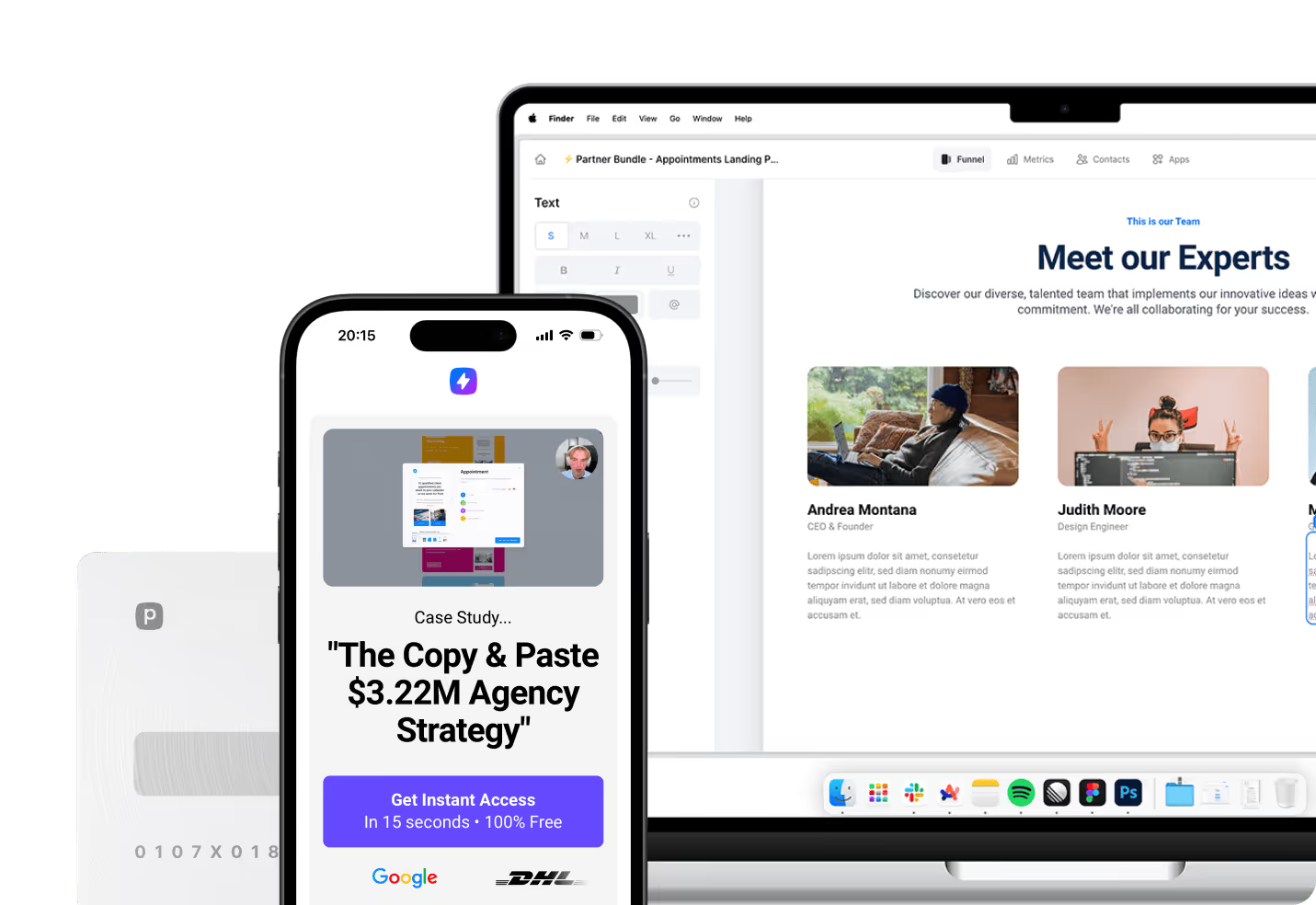
Builder experience: control vs simplicity
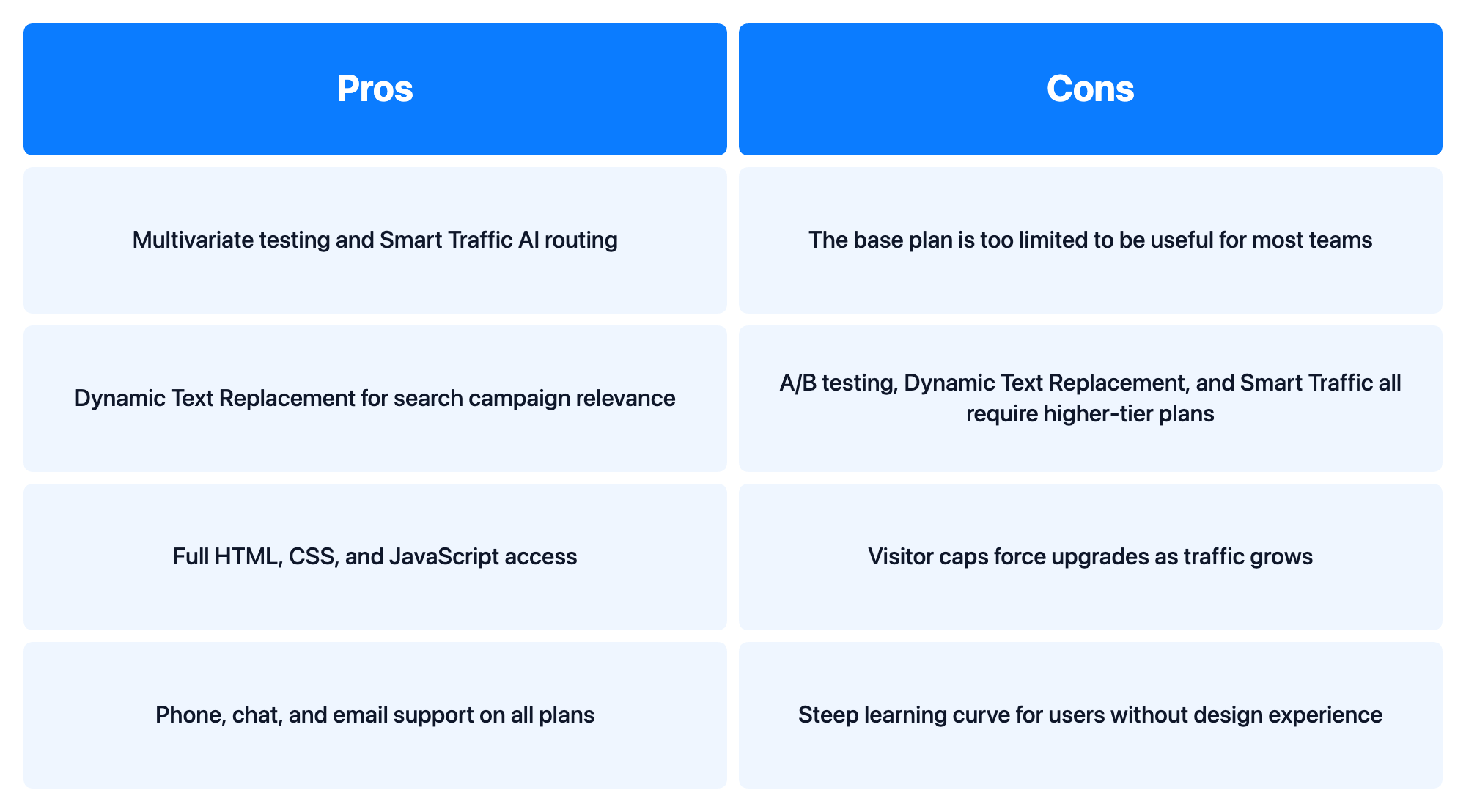
Unbounce assumes you need complete control over every element of your page. You place elements where you want them, adjust every detail of the layout, write custom code if needed, and run tests across multiple variants simultaneously.
Without design or development experience, that flexibility becomes a liability rather than a bonus. There's a steep learning curve, and no guardrails to prevent you from building a page that doesn't convert.
Leadpages features a simple drag-and-drop builder that doesn't overwhelm you with options. You can start with a template or describe what you need to the AI builder, and it generates a full-page layout from there. However, creative freedom is limited compared to Unbounce — you work within the template structure rather than around it.
A faster way to build funnels with AI
Perspective's AI builder is more efficient than either of these. It only needs two things: your website link and your target audience. It runs a deep analysis of your positioning and strengths. Then it generates the whole funnel: copy, structure, and layout. All built to convert.
Already have a funnel that's converting? AI Duplicate spins up a new version for a different product, audience, or goal. It keeps the parts that are working and rewrites the rest to fit.
Alles für dein Wachstum, an einem Ort
Erstelle in nur 30 Minuten deinen ersten conversionstarken Funnel, versende Nachrichten, verfolge wichtige Kennzahlen, verwalte Leads in einem vollwertigen CRM und erstelle Sub-Accounts für Kunden & Team – alles in einer wunderschönen Plattform.


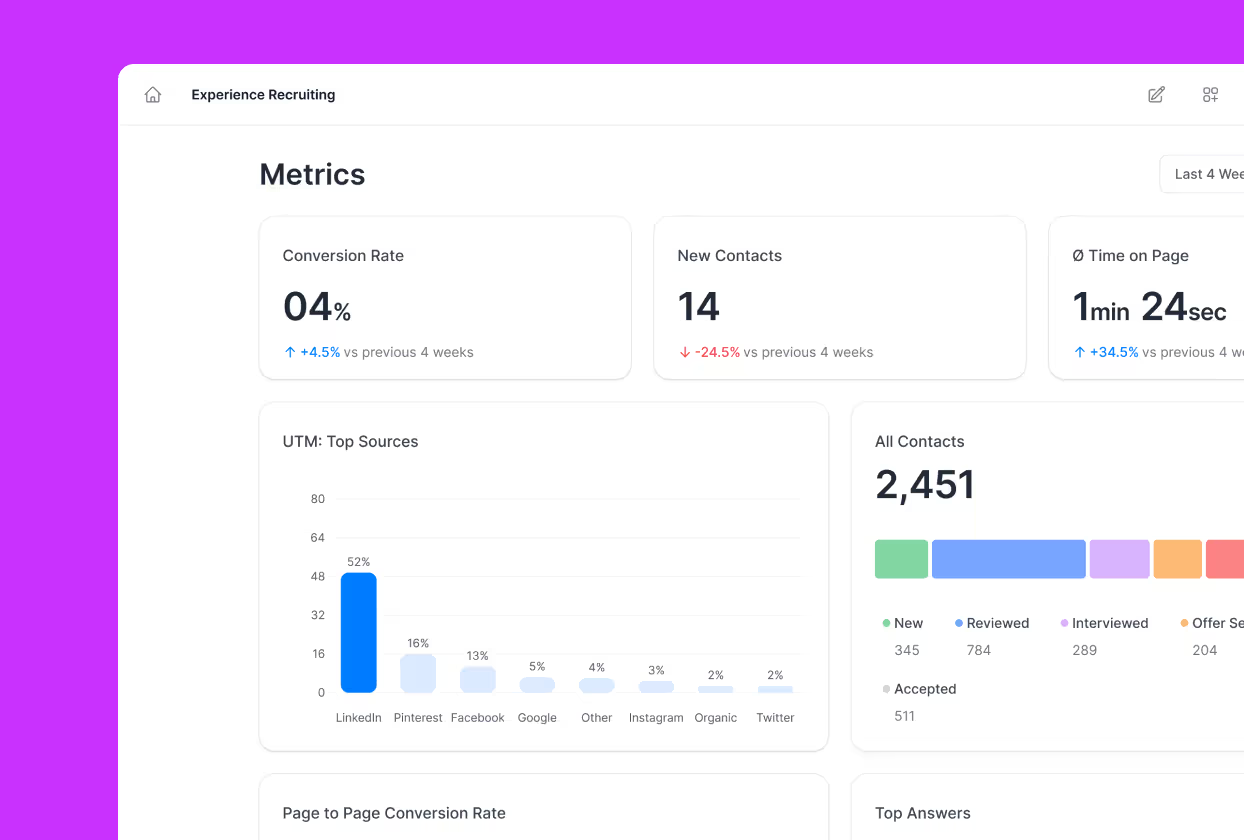


Conversion optimization tools
Leadpages supports single-variable A/B testing on the Pro plan and above. You can test one element at a time, like a headline, a CTA, or a layout, and see which performs better. There's no AI routing, no dynamic content, and no multivariate capability.
Unbounce has a stronger focus on conversion rate optimization. It allows testing multiple things at a time, routes visitors to the variant most likely to convert, and can match page copy to search intent. However, none of these are available on the base plan.
Both platforms offer popups and sticky bars as additional conversion surfaces, although Unbounce's are more configurable.
Conversions start with the mobile experience
What many builders miss is that conversion optimization starts before any test is run — it starts with whether the page is built for the screen it's viewed on. Perspective's templates are mobile-first by design, optimized to convert traffic from Instagram, TikTok, and Meta ads.
From there, instead of asking visitors to fill out a form cold, Perspective guides them through a sequence of questions that builds engagement at every step. By the time they reach the form, they're already invested in the process.
Perspective also includes:
- A/B testing
- Dynamic headlines
- Smart personalization
And because none of it matters without accurate data, Perspective keeps ad attribution intact from first click to final conversion. Native GA4, Meta Pixel, and TikTok tracking come built in.
Unbounce vs Leadpages pricing
Unbounce's base plan starts at $29/month with one user, five pages, and up to 500 monthly visitors. The Experiment plan at $149/month is where it actually becomes usable. That's where A/B testing, multiple users, and Dynamic Text Replacement live.
Leadpages starts at a higher price, but doesn't cap traffic the way Unbounce does. The Standard plan at $49/month covers one site with five pages, pop-ups, and alert bars. Full platform functionality unlocks at $99/month, adding A/B testing, checkout forms, and upsells.
Leadpages' premium pricing seems more affordable than Unbounce's premium plans, but the feature set is considerably more basic.
Perspective costs
Perspective doesn't cap traffic or pages — it only counts the leads you generate and the funnels you build. You don't pay for traffic that doesn't convert.
Perspective's plans start at $59/month ($47/month on an annual plan) for two active funnels and 100 generated leads. All plans include unlimited workspaces and domains, with white-label options available — making it the most agency-ready option of the three.
Where Unbounce and Leadpages overlap
Unbounce demands more technical involvement to control layouts. Leadpages simplifies that, though you sacrifice customization.
What these two have in common is:
- Drag-and-drop page builder
- Template library
- Lead generation forms
- A/B testing (on higher plans)
- Popups and sticky bars
- AI copywriting
They also share the same ceiling. Neither tool thinks beyond the single page. They're not designed to connect pages into a cohesive funnel.
When the conversion journey doesn't fit on a single page
With Unbounce and Leadpages, getting from one page to a complete lead journey means connecting a landing page to a form, the form to a thank-you page, the thank-you page to an email sequence, and so on. Each step requires a separate tool and a separate setup.
Perspective builds the entire funnel in one place, from lead capture to conversion to follow-up.
A visitor clicks your ad, answers a question, and gets taken to a page relevant to their answer. Personalized experience for them. Qualified leads for you.
After the form submission, you can automate email and WhatsApp follow-ups for lead nurturing, upsells, or retention.
The verdict: Unbounce or Leadpages?
Unbounce suits paid search campaigns and teams with design or development experience.
Leadpages is designed for small businesses that want templated pages without customization needs.

When one page isn't enough, there's Perspective.
You get:
- A single tool to manage direct response campaigns
- Mobile-first funnels that load instantly on any device
- AI-assisted builder that launches campaigns fast without added complexity
- Built-in CRM and lead management
- Automatic messaging across email and WhatsApp
- Clear funnel metrics from first click to conversion
All in one platform, without the setup complexity of Unbounce or the limitations of Leadpages.
.png)
FAQs: Unbounce vs Leadpages
Why Perspective beats Unbounce and Leadpages
The Unbounce vs Leadpages choice forces you to pick between two tools that stop at the landing page. Perspective takes you from first click to qualified lead in one workflow.
✔️ Launch funnels in minutes with an intuitive, AI-first builder
✔️ Mobile-first pages that load fast and convert
✔️ Built-in messaging, native email, and lightweight CRM
✔️ Clear analytics with GA4/pixel support and easy integrations
✔️ Personalization with reusable sections and dynamic content
✔️ Predictable pricing after the trial, starting at $59/month
aStart your free trial of Perspective 👇
.png)