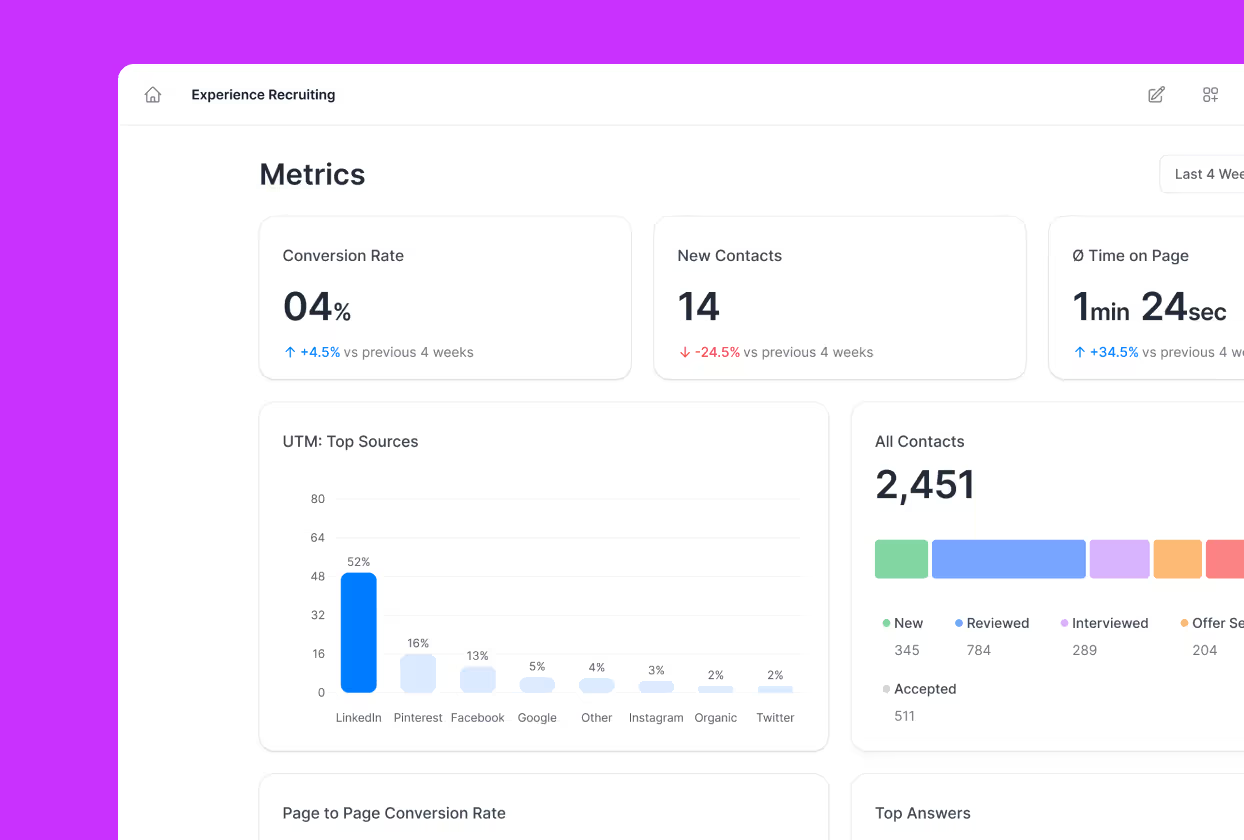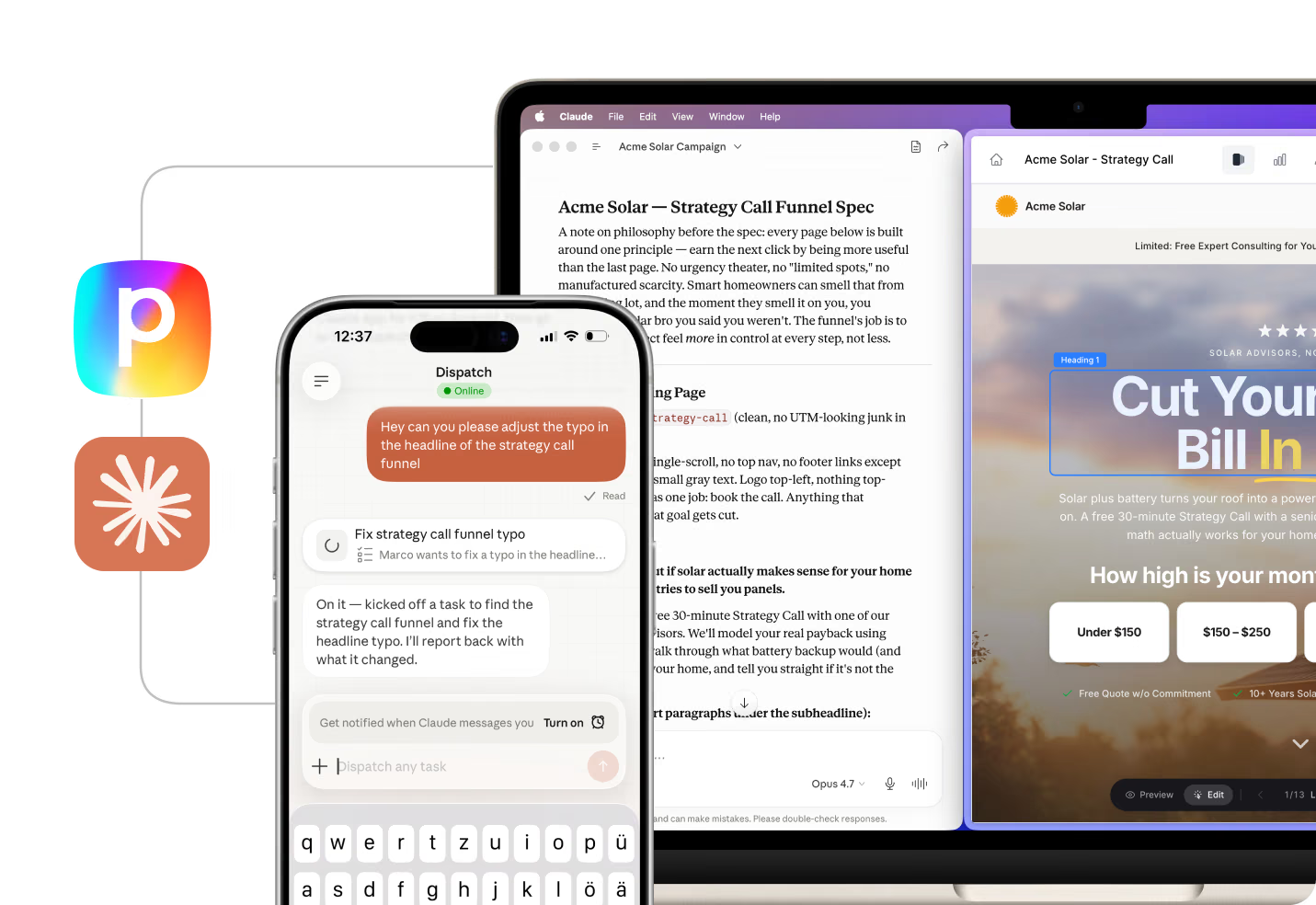
This guide compares 10 tools for dynamic landing pages: Perspective, Swipe Pages, Optimizely, Demandbase, Adobe Target, Unbounce, Dynamic Yield, Instapage, Personyze and HubSpot. Perspective, Swipe Pages, Unbounce, Instapage and HubSpot build and personalize the page, Personyze hosts pages as an add-on, and the rest personalize pages you already have. Perspective also qualifies each visitor with a few questions and follows up by email or WhatsApp within 60 seconds.
A dynamic landing page changes its content for each visitor. It adapts the headline, copy, offer, or form based on the visitor's traffic source, ad keyword, location, or answers given on the page.
What are dynamic landing pages?
Dynamic landing pages are web pages that change their content based on who is viewing them. The page reads signals about the visitor, such as the ad they clicked, the keyword they searched, their location, or their answers in a form. It then shows the headline, copy, images, or offer that match those signals.
How dynamic landing pages work
A dynamic landing page uses three types of input to decide what each visitor sees:
- The ad or keyword that sent the click. Each ad link carries a short tag in the URL with the keyword or campaign name. The page reads that tag and swaps in the matching headline and copy.
- What you already know about the visitor. The page can use the visitor's location, their device, or whether they have visited before. If the visitor is already in your CRM, the page can show content for their company or industry.
- What the visitor tells the page. The page asks a few questions, such as project type or budget. Each answer decides which content, offer, or next step appears.
You set these rules once in your landing page tool, and the page applies them to every visitor.
For example, a roofing company runs two Google Ads: one for “roof repair” and one for “roof replacement.” Both ads send visitors to the same landing page. A visitor who clicked the repair ad sees the headline “Fast Roof Repair.” A visitor who clicked the replacement ad sees “New Roof Installation.” The page detects that both visitors are in Austin and adds the city to the headline. It also asks, “Is this for a home or a business?” If the visitor picks “business,” the page shows commercial pricing.
10 best tools for dynamic landing pages at a glance
Tool | Key features | Best for |
AI funnels that qualify, follow up in 60 seconds, track each lead | Marketers turning paid traffic into booked appointments | |
AI landing page builder with Dynamic Text Replacement | Small teams matching pages to their ad keywords | |
Optimizely | Experimentation suite with audience targeting | Enterprise CRO teams with developer support |
Demandbase | Account intent data with on-site personalization | B2B teams running account-based advertising |
Adobe Target | Testing and personalization inside Adobe Experience Cloud | Adobe-stack teams with analytics resources |
Landing page builder with Dynamic Text Replacement | Marketers swapping headlines for PPC campaigns | |
Dynamic Yield | Ecommerce personalization and product recommendations | Online retailers personalizing by behavior |
PPC landing pages with ad-to-page matching | Large PPC teams with page budgets | |
Personyze | Personalization overlay for existing websites | Teams personalizing a site they already own |
HubSpot | CRM-driven smart content and dynamic pages | HubSpot customers personalizing by lifecycle stage |
Prices are in US dollars.
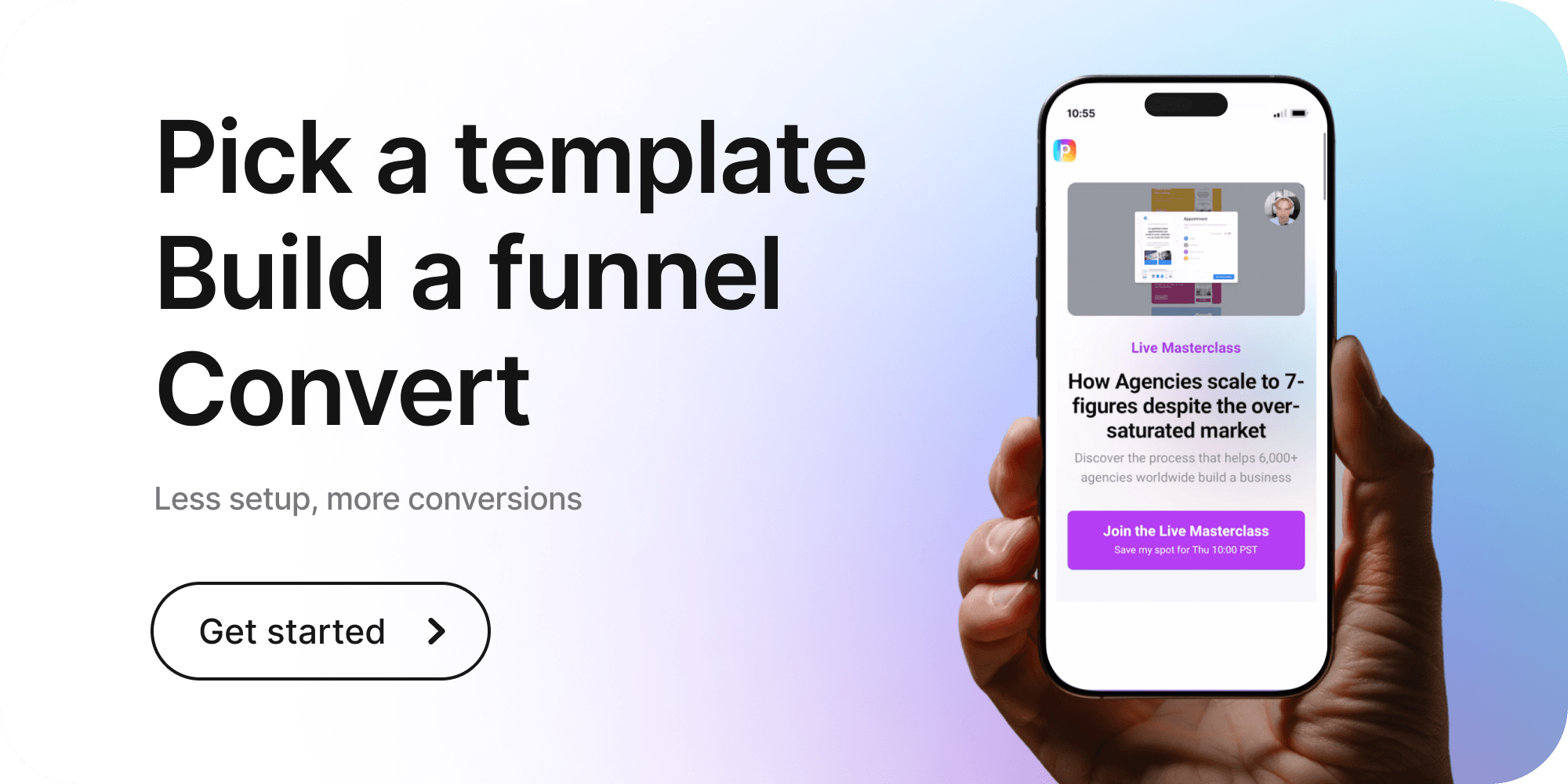
10 best tools for dynamic landing pages in detail
Most of these tools offer dynamic content personalization. Fewer handle the next step: booking the call and following up the lead.
1. Perspective
At a glance
Perspective is an AI funnel builder for performance marketers running paid ads. Its dynamic landing pages ask visitors a few questions to qualify them, and Perspective follows up by WhatsApp or email.
What makes it stand out
Perspective treats the page as a conversation. The dynamic landing page asks one question at a time, and the next step adapts to each answer. By the time a visitor submits the form, you already know their needs, budget, and timeline.
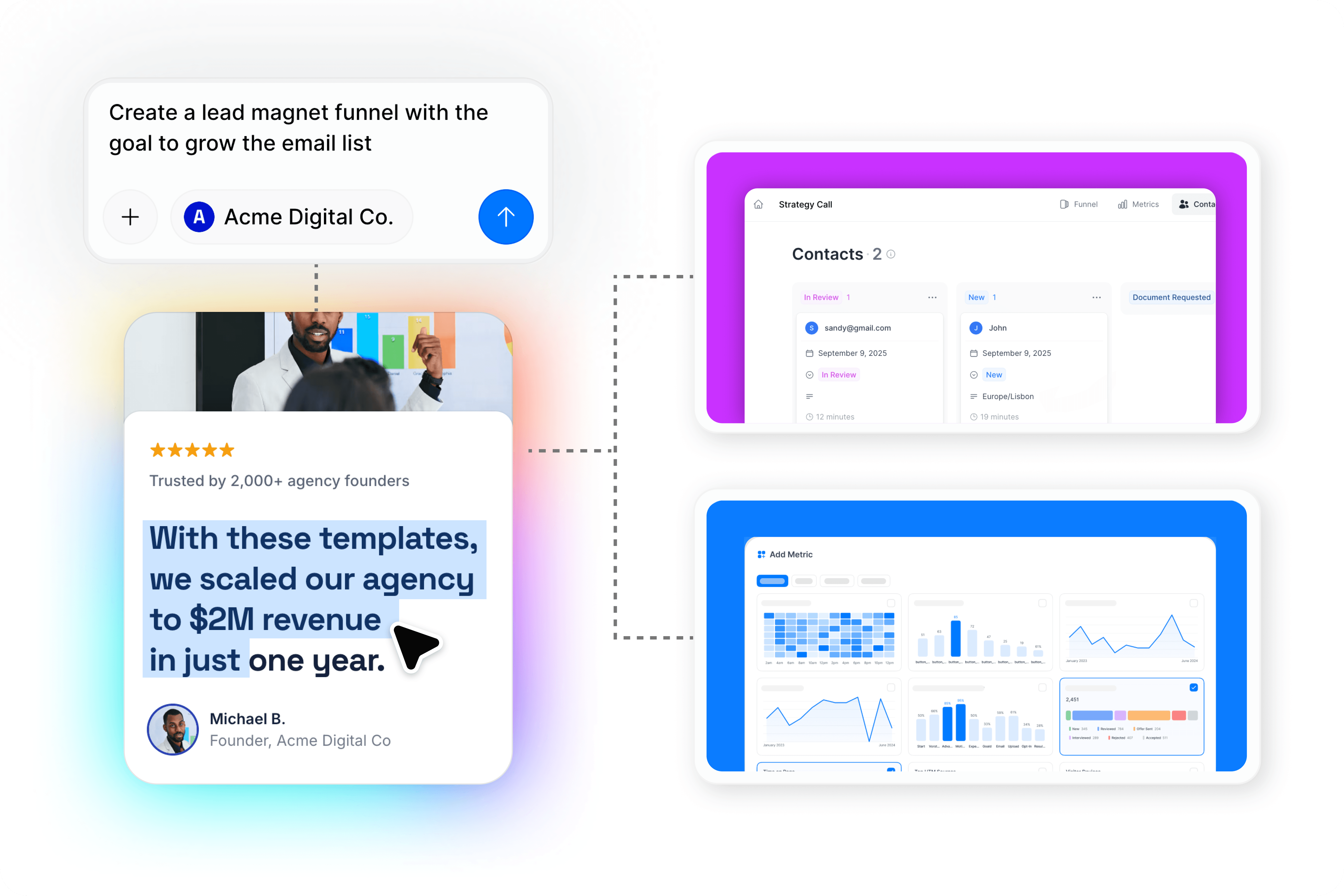
But Perspective doesn't stop at building a page. Perspective saves the lead and all their answers in Contacts, its built-in CRM. It then sends automated follow-up by email or WhatsApp, with messages based on what the lead told you.
You build all of this with Perspective's AI builder or through the Perspective MCP. Describe what you need, and it creates the funnel with hosting, tracking, contacts, and email sequences already connected. You can then edit any part of the page by hand without prompting again.
How it compares
Perspective keeps each lead's answers, their contact record, and the follow-up in one place, and sends each conversion back to Meta through the Conversions API.
Key features
- Mobile-first dynamic landing pages
- Quizzes that qualify visitors one step at a time
- Conditional logic
- WhatsApp and email sequences triggered on submission
- Metrics from ad click to lead
- A/B testing on the first page, from the Grow plan
- Integrations with GoHighLevel, HubSpot, Zapier, Make, and Meta CAPI
Pricing snapshot
Perspective starts from $47 a month, billed yearly, and every plan starts with a 14-day free trial. Dynamic Headlines, Smart Personalization, and WhatsApp messaging start on the Expand plan.
Strengths
- Builds complete mobile-first funnels
- Qualifies leads on the page
- White-label workspaces for agencies managing several clients
- More than $1 billion in ad spend has run through funnels built on Perspective
Limitations
- Built for funnels and lead generation, not whole websites or ecommerce stores
Use case
Perspective fits anyone running ads to generate leads, including agencies, founders, and hands-on marketers. Nicolas Meining, founder of Dreamlife, reached a 12.5 ROAS with one Perspective funnel.
Want to see what this looks like in practice? Here is how real customers use Perspective to drive results.
Build a short qualification funnel on your own traffic and watch what the answers do to your cost per appointment.
2. Swipe Pages
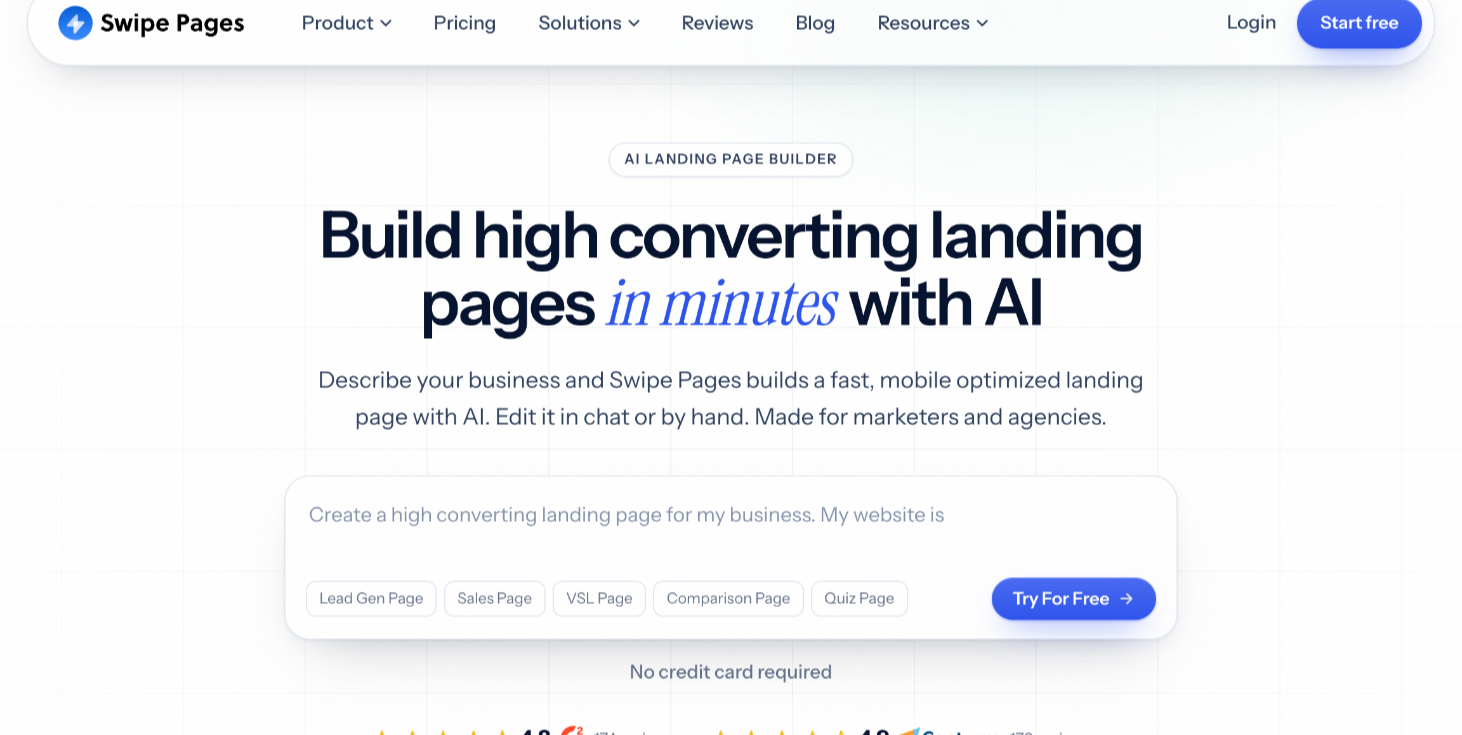
Swipe Pages is a landing page builder for paid campaigns, with an AI builder called Swipe Genie that researches, builds and edits pages for you.
Its dynamic content comes from Dynamic Text Replacement. You pass data through the page URL, such as the keyword from your ad, and Swipe Pages swaps it into the copy on the page. For phone visitors, Swipe Pages can also show Mobile Slides, an app-like version of the page.
Key features
- Swipe Genie, an AI builder that builds and edits pages
- Dynamic Text Replacement from URL data
- Server-side A/B testing
- Mobile Slides for phone visitors
- Multi-step forms, lead notifications, and lead magnet delivery
Pricing snapshot
Swipe Pages starts at $29 a month, billed yearly, on the Startup plan with 20,000 visitors a month. A/B testing and personalization start on the Marketer plan at $69 a month, billed yearly. Above the visitor allowance, you pay $5 per 5,000 extra visits.
Strengths
- Builds landing pages and personalizes them in one tool
- Mobile Slides give phone visitors an app-like page
Limitations
- A monthly visitor allowance on every plan
Use case
Small teams and agencies who want landing pages that match their ad keywords, without a developer.
3. Optimizely
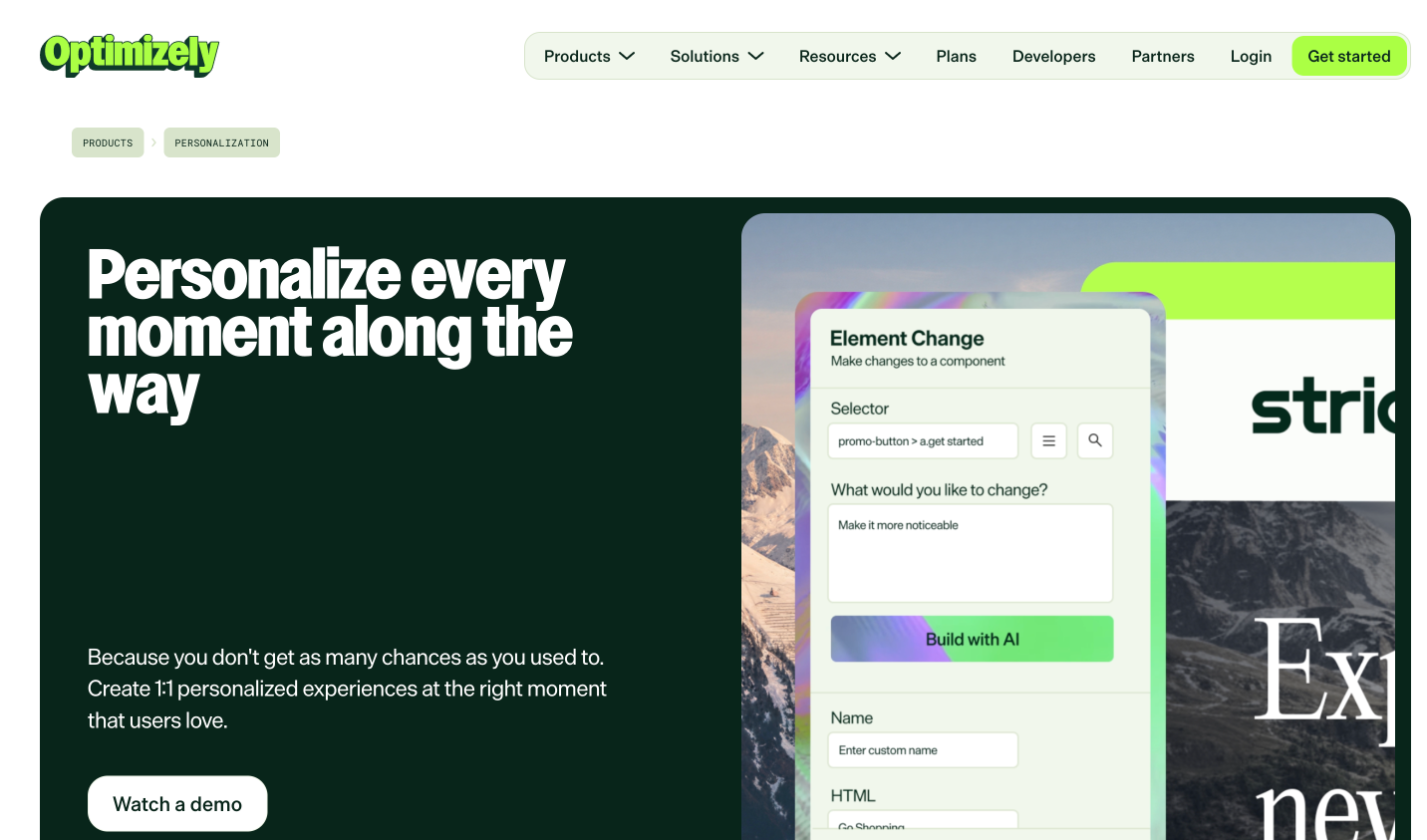
Optimizely is an experimentation platform for testing and personalizing pages on an existing website.
Its dynamic content works as a layer on top of your site. Optimizely uses behavioral data and test results to show each audience a different version of a page you already have. You build the pages in Optimizely's separate CMS or any other site builder.
Key features
- A/B testing on existing web pages, with a visual editor for no-code tests
- Server-side testing for deeper experiments
- Personalized page versions for different audiences
Pricing snapshot
Optimizely doesn't publish prices. Every plan is packaged individually with its sales team.
Strengths
- Combines experiments and personalization in one platform
Limitations
- Personalizes pages you already have, without tools to build new landing pages (there's a separate product for it)
- Server-side testing and complex setups need developer support
Use case
Enterprise CRO and product teams with engineering support who want to test and personalize a large existing website.
4. Demandbase

Demandbase is an account-based marketing platform. Dynamic content personalization is one of the things it does, alongside advertising, account data, and sales tools. It identifies the company a website visitor works for and changes the copy, images, and calls to action on your existing pages to match.
Key features
- Visitor identification and dynamic content personalization
- Account-based advertising
- Intent data and buying group views
Pricing snapshot
Demandbase doesn't publish prices. Each quote is a platform fee plus a flat fee per user.
Strengths
- Personalizes the site in real time for each target account
- Combines website personalization, advertising, and account data in one platform
Limitations
- Built for account-based campaigns aimed at a named list of target companies
Use case
Enterprise B2B marketing teams running ABM programs who want their existing website to adapt for a list of target accounts.
5. Adobe Target
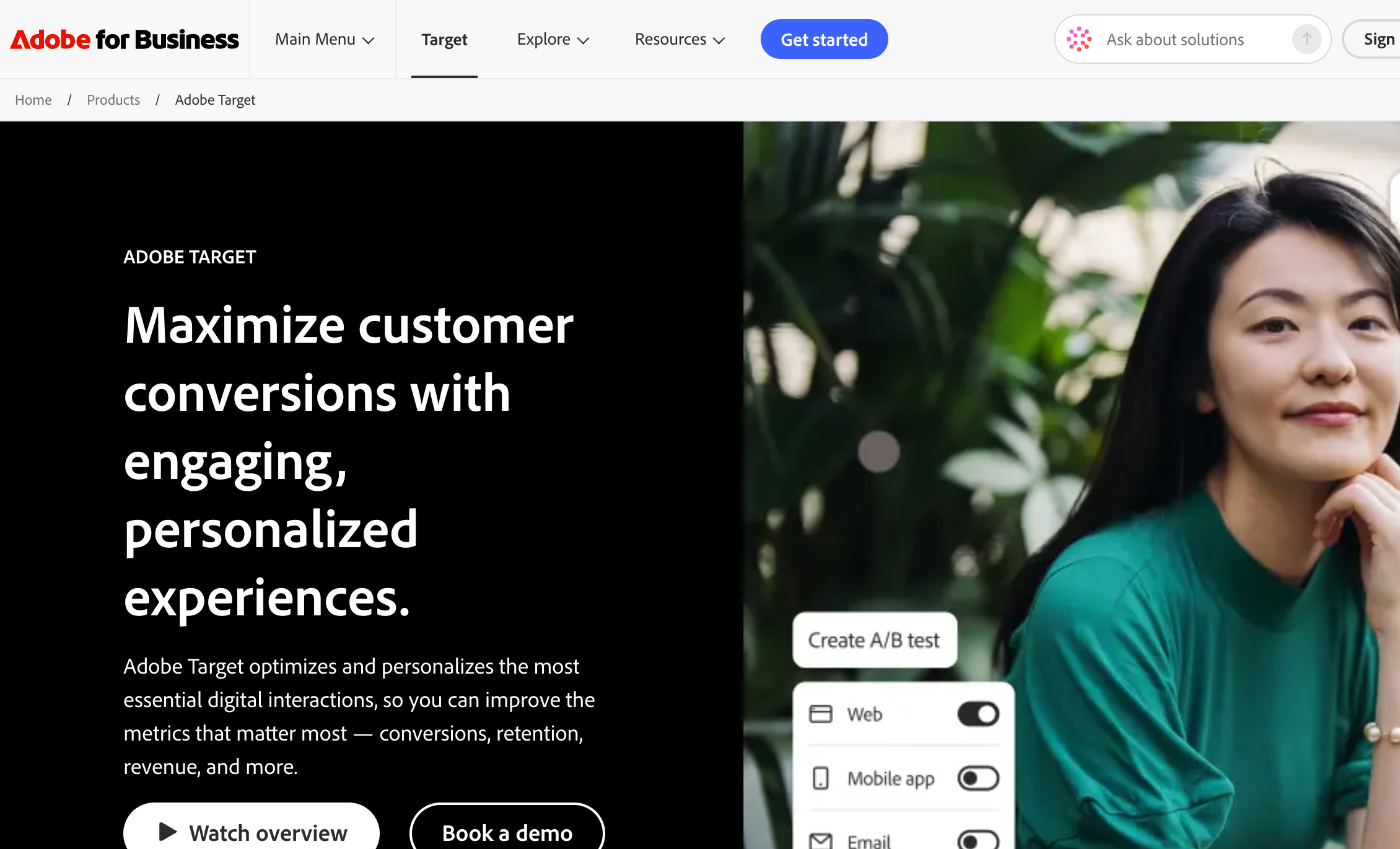
Adobe Target is Adobe's testing and personalization tool for enterprise websites and apps. It makes existing pages dynamic: Target uses audience rules, real-time visitor behavior, and AI to decide which version of a page, offer, or product selection each visitor sees.
Key features
- Audience rules combined with real-time behavior data
- AI that ranks offers and navigation options by likelihood to convert
- A/B, multi-element, and multi-armed bandit testing
- Same-page and next-page personalization in real time
- Tailored product selections
Pricing snapshot
Adobe Target doesn't publish prices. You book a demo with Adobe to get a quote.
Strengths
- Tests and personalizes web and mobile app experiences from one platform
- AI-driven decisions on which experience each visitor sees
Limitations
- Works on pages you already have
- Built for enterprise teams in the Adobe ecosystem that test and personalize large websites and apps
Use case
Enterprise marketing and product teams already using Adobe Experience Cloud who want to test and personalize large websites and apps.

6. Unbounce

Unbounce is a landing page builder for paid campaigns.
Its dynamic content comes from Dynamic Text Replacement. You add the visitor’s search keyword to your ad's URL, and Unbounce inserts it into the page's headline or copy. On the Optimize plan, its AI traffic routing sends each visitor to the page variant most likely to convert for them.
Key features
- Drag-and-drop builder with templates
- Dynamic Text Replacement for search keywords
- AI traffic routing to best-fit variants
- A/B testing, popups, and sticky bars
- MCP server
- 1,000+ integrations from the Build plan
Pricing snapshot
Unbounce starts at $22 a month, billed yearly, for 5 pages and up to 500 visitors. Dynamic Text Replacement and A/B testing start on the Experiment plan at $112 a month, billed yearly, with up to 30,000 visitors.
Strengths
- Builds landing pages and personalizes them in one tool
- Keyword matching from search ads without developer help
Limitations
- Monthly visitor caps on every plan
Use case
PPC marketers who want dynamic landing pages that echo the search term in the headline.
7. Dynamic Yield
Dynamic Yield is an AI personalization platform from Mastercard, built mainly for ecommerce and retail brands.
It makes an existing website or app dynamic: its AI reads customer signals and decides which offers, product recommendations, and content each shopper sees.
Key features
- AI-driven offers and content per visitor
- Product recommendations
- Experiments on any digital property
- Customer segmentation and journey orchestration
- Conversational shopping assistant (Shopping Muse)
- Experience APIs for developers
Pricing snapshot
Dynamic Yield doesn't publish prices. You book a demo to get a quote.
Strengths
- Strong product recommendations for stores with large catalogs
- One AI engine for personalization, search, and recommendations
Limitations
- Works on the website or app you already have
- Built around shopping behavior, for ecommerce and retail sites with large catalogs
Use case
Large ecommerce and retail brands that want to personalize product discovery across their website and apps.
8. Instapage
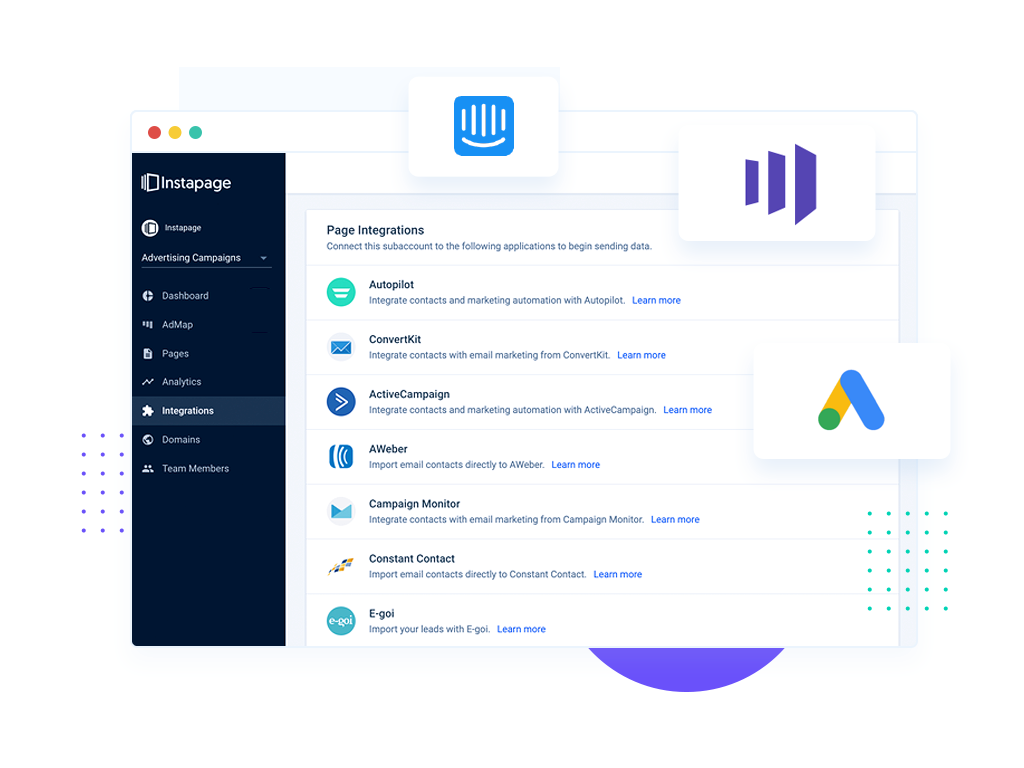
Instapage is a landing page platform for paid ads, including Google Ads.
Its dynamic content works in three ways. Dynamic Text Replacement swaps in the visitor's search keyword. Collections turn one page into many versions for different audiences and locations. Ad-to-page personalization matches each page to the ad that sent the click.
Key features
- Drag-and-drop builder with templates
- Dynamic Text Replacement
- Collections for audience-specific page versions
- Ad-to-page personalization
- AdMap for linking ads to pages
- AI copy and page variations
- Forms, contacts, and email marketing
Pricing snapshot
Instapage starts at $79 a month, billed yearly ($99 billed monthly), with the builder, forms, AI content, and contacts and email, for 15,000 visitors a month. Dynamic Text Replacement and server-side A/B testing start on the Optimize plan at $159 a month, billed yearly ($199 billed monthly). Ad-to-page personalization and heatmaps are only on Convert, a custom-priced plan.
Strengths
- Builds, personalizes, and tests pages in one tool
- Several ways to match pages to ads and audiences
Limitations
- Monthly visitor caps on every plan
- Multi-step forms need the Optimize plan or higher
Use case
Large PPC teams that build a separate page for each Google Ads group and pay for visitor caps.
9. Personyze
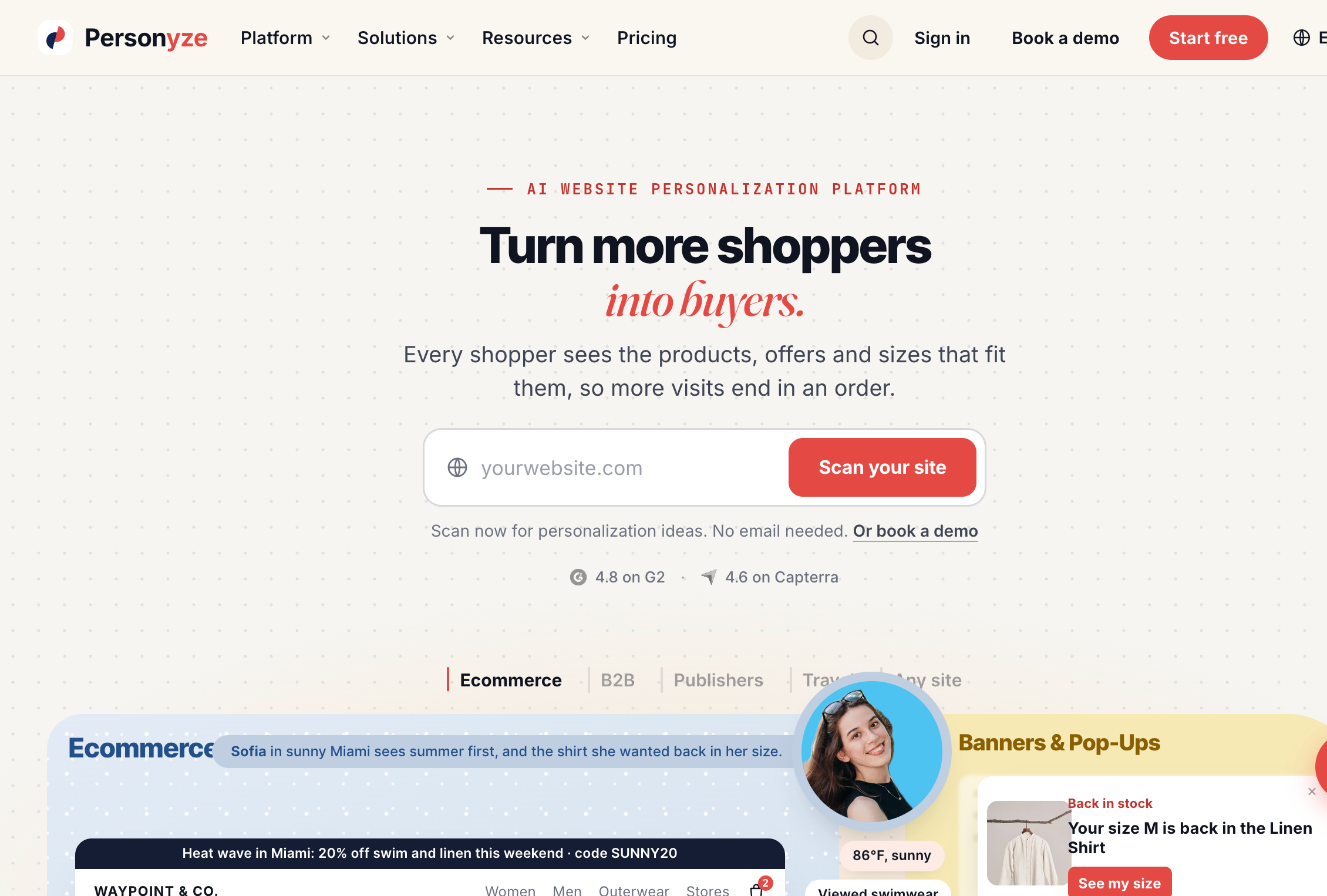
Personyze is a no-code personalization and A/B testing platform for marketers. It makes pages dynamic by changing content, offers, and layouts for each visitor based on traffic source, location, behavior, or CRM data.
Key features
- Personalization by ad, keyword, company, location, device, or CRM data
- Dynamic landing pages
- A/B testing per audience
- Product and content recommendations
- Rule-based pop-ups and banners
- Email and SMS personalization
Pricing snapshot
Personyze is free for 5,000 pageviews a month and 2 active campaigns. Paid plans start at $134 a month, billed yearly ($149 billed monthly), with 50,000 pageviews and unlimited campaigns. Landing pages that Personyze hosts for you are a $49 a month add-on with 25,000 hosted views a month.
Strengths
- Wide range of targeting signals, including the ad, company, and location
- Setup with one snippet or the WordPress plugin
Limitations
- A pageview allowance on every plan, with a charge for extra pageviews on paid plans
Use case
Small marketing teams personalizing their website without developers, across ecommerce, B2B, and agency work.
10. HubSpot

HubSpot is a CRM platform with marketing and content tools. Its landing pages become dynamic through smart content rules. You create versions of a page section, and HubSpot shows each visitor the matching version based on the ad they clicked, their country, device, referral source, or CRM data.
Key features
- Drag-and-drop landing pages
- Smart content rules by ad source, location, device, or CRM data
- Forms connected to the CRM
- A/B testing
- Email and workflow automation
- Built-in CRM
Pricing snapshot
HubSpot's free and Starter plans don't include smart content. Smart content on landing pages needs Content Hub Professional or Enterprise.
Strengths
- Landing pages, CRM, and email automation in one platform
- Smart content can match a page section to the ad that sent the click
Limitations
- Each personalized section is set up by hand, rule by rule
- Built for teams that run their CRM, email, and website in one hub, with landing pages as one part of it
Use case
Teams already using the HubSpot CRM who want landing pages that adapt to ad source and contact data.
Dynamic landing pages vs static landing pages
A static landing page shows the same headline, copy, and form to everyone. A dynamic one changes based on the ad, the visitor, and their answers.
That makes it a cost-per-lead question. A static form asks for everything at once, and most visitors leave. Across more than 100,000 funnels, Perspective's interactive funnels convert 2 to 3 times better than static forms.
How to create dynamic landing pages for PPC and Google Ads
Make the first screen repeat the promise in the ad. Then ask rather than assume: two or three questions sort serious buyers from browsers, and each gets a different next step, a booking calendar for one and a resource for the other.
Follow up inside 60 seconds. In Perspective, WhatsApp and email trigger on submission and every answer stays on the contact record. Then measure from ad click to appointment, not to form fill.
How to choose the right tool for dynamic landing pages
Judge a tool on four things. Does it load fast on mobile? Does it qualify before it converts? Does it follow up within a minute? Can it tie the appointment back to ad spend?
Try Perspective on one campaign and compare the cost per appointment with your static page.
FAQs: dynamic landing pages
How do dynamic landing pages work?
A dynamic landing page changes its content for each visitor. What changes depends on three things: the ad or keyword that brought them in, what you already know about them, and the answers they give on the page.
Can I create dynamic landing pages automatically?
Yes. With Perspective, you describe what you need and a multi-step landing page gets built. Its headline changes through the URL to match the ad that sent each visitor. From there, each step adjusts based on how the visitor answered the step before.
You can also do it inside Claude, ChatGPT, or Manus through the Perspective MCP.
To build your first one in minutes, start your 14-day free trial.
Are dynamic landing pages good for Google Ads?
Yes. When the page matches the keyword someone searched, it feels more relevant to them. That can raise your conversion rate and improve how Google rates your landing page experience. The gain is bigger when the page also asks a few questions to qualify the visitor.
What are some dynamic landing page examples?
- A dental clinic running Google Ads. Someone searches “teeth whitening Austin” and lands on a page headed “Teeth whitening in Austin.” Someone who searches “dental implants cost” lands on the same page, now headed “Dental implants: see your price.”
- A gym chain with several locations. A visitor from Denver sees the Denver gym's address, opening hours, and a trial-class offer. A visitor from Boulder sees the Boulder branch instead.
- A solar installer's quiz funnel. The visitor answers questions about roof type, monthly energy bill, and home ownership. The last screen shows an estimated saving and books a consultation, and renters are sent to a different page.
What is the best free landing page builder for dynamic landing pages?
Personyze and HubSpot both have free plans. Perspective has a free plan for people who sign up through the Perspective MCP, with the full MCP, 10 AI credits, and 5 leads to test your funnel.
To see a dynamic landing page on your own ads, start your 14-day free trial of Perspective.