%20copy%202.jpg)
Lovable starts you on a blank canvas, which sounds freeing until you're an hour in and still piling detail into your prompt. One size fits all usually means it fits no one, so teams end up looking for a Lovable alternative built around their specific use case.
This guide compares the 10 best Lovable alternatives on what they build, what they cost, and what users love and hate them for.
Lovable alternatives compared: the quick overview
{{cta}}
Lovable explained
Lovable is an AI app builder. You describe what you want in chat and it generates a full-stack web page you can publish on a custom domain.
Its features include:
- Full-stack website, app, or page generation from text prompts
- Lovable Cloud with a managed database
- Transactional email sent from your own domain
It's a favorite for passion projects because the barrier to entry is low. For task-specific pages, though, you get too much freedom to build the page and not much to work with once it's live. No contact management, no marketing email sequences, no real performance reporting.
Lovable hands you a page and stops there. Everything else takes four more tools, which is why teams start hunting for a Lovable alternative.
The 10 best Lovable alternatives
1. Perspective
Used by: performance marketers and agencies driving appointments from paid traffic.
Perspective is an AI Funnel Platform and the strongest Lovable alternative for anyone running ads.
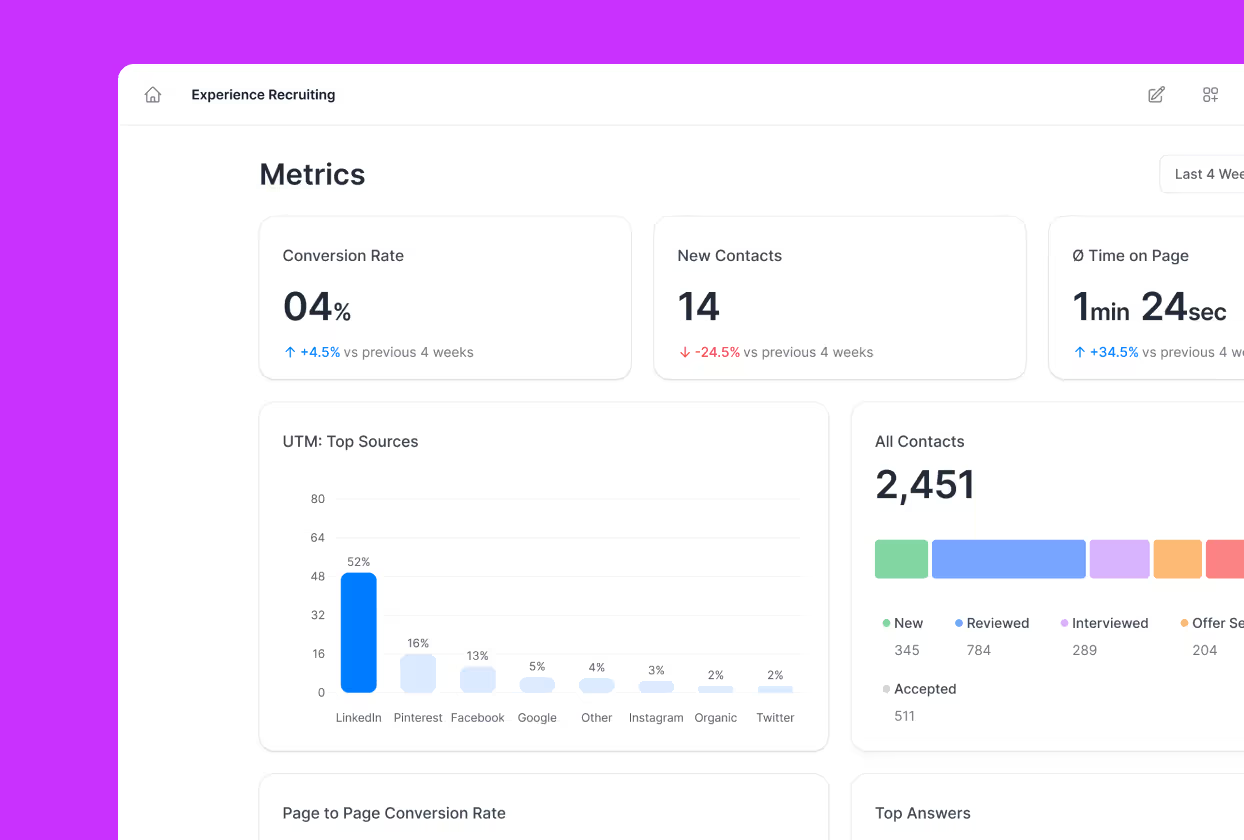
Lovable hands you a page. Perspective builds the whole path from the ad click to the booked appointment. The pages are mobile-first — made for the paid traffic that comes in on a phone, thumb-friendly, with qualification built right into the flow. Follow-up over email and WhatsApp goes out within 60 seconds of a form submission, every contact sits in one place, and the reporting ties it all back to what you spent.
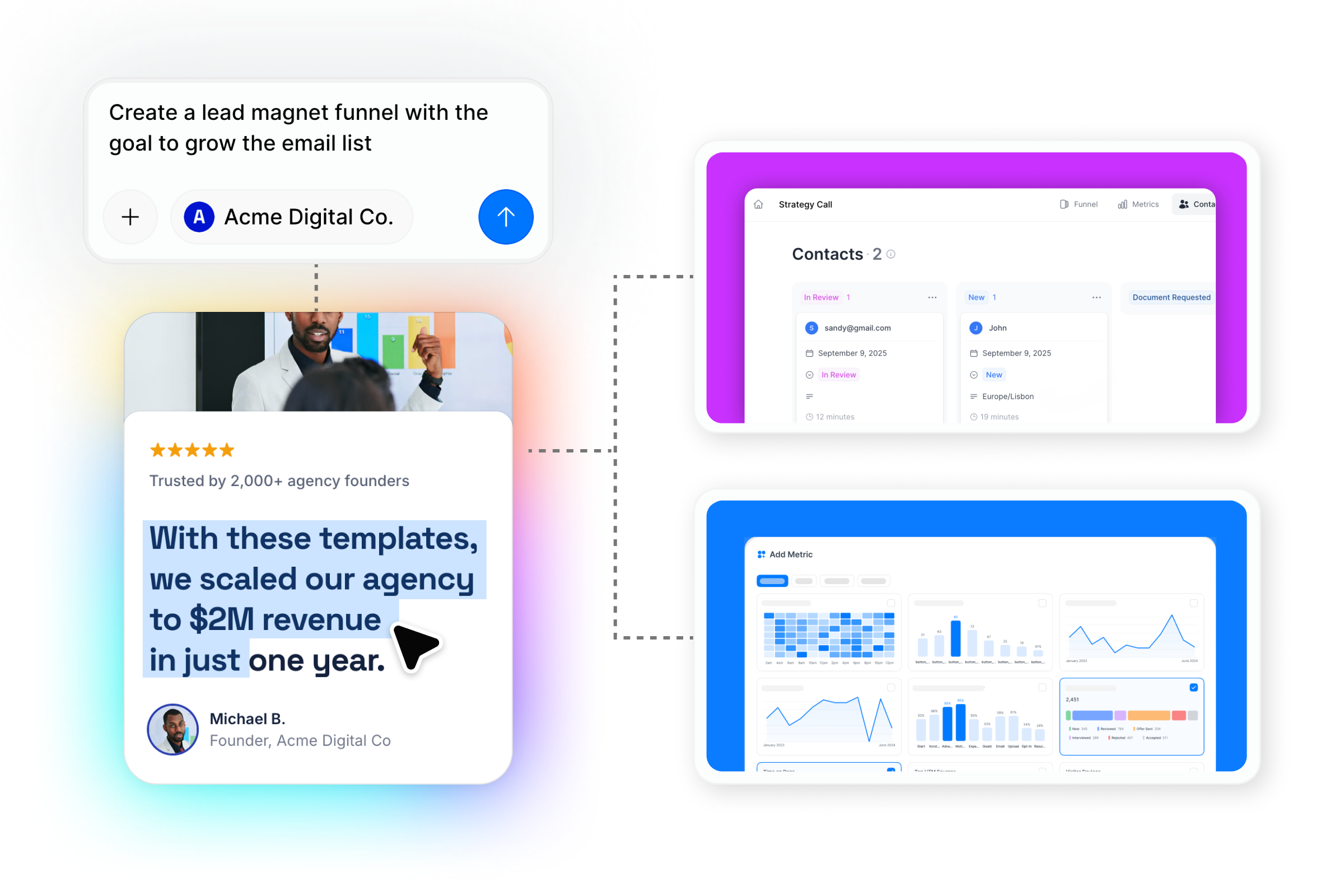
You start the way you would with Lovable — from a prompt. Describe the goal and you get the whole funnel. From there you edit it by hand: double-click a headline, drag a section, delete a block, undo anything, without re-generating the page over and over.
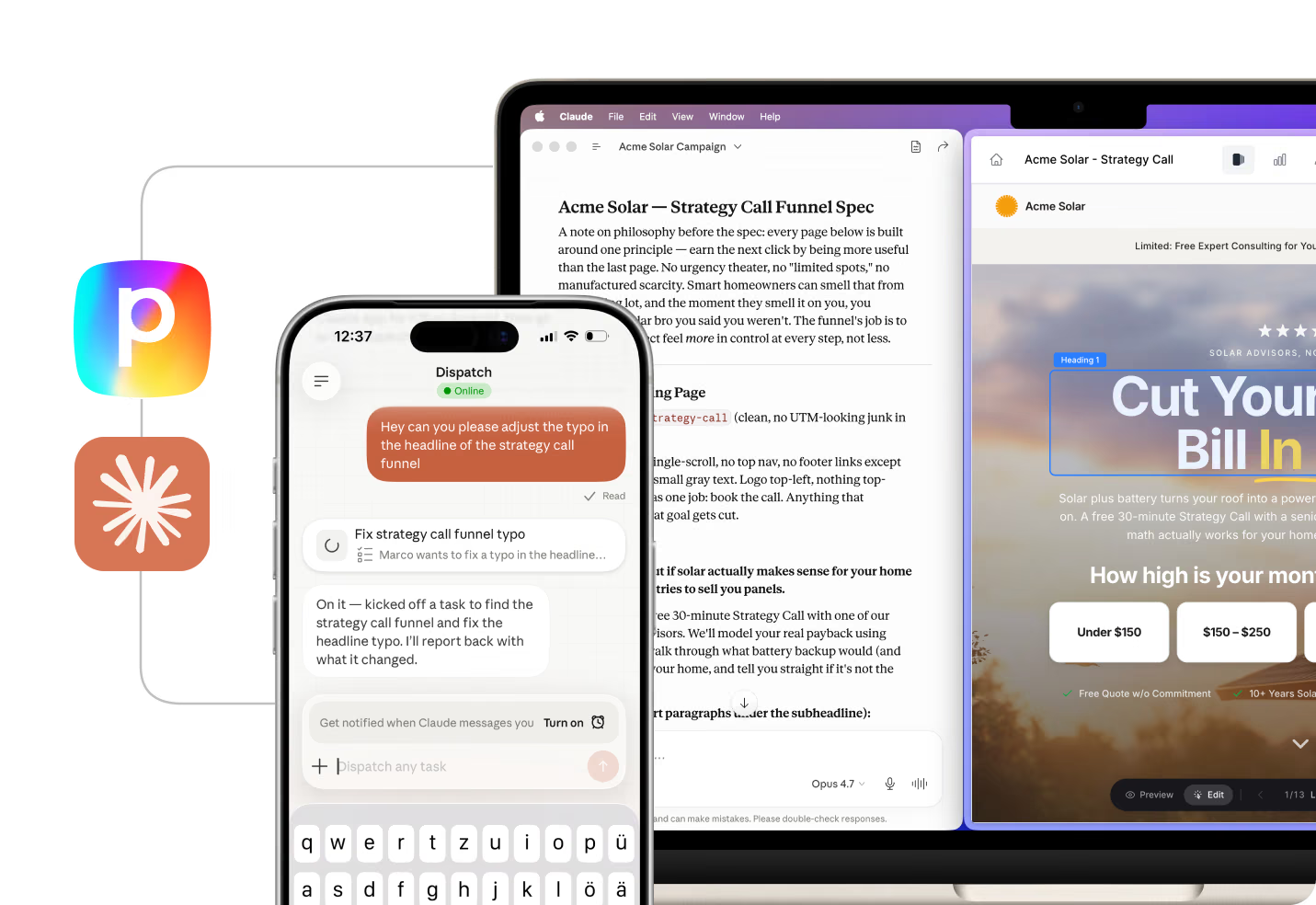
You can do that with the AI builder inside Perspective, or through the Perspective MCP, which connects Perspective to Claude. The MCP can also review performance and ship the improvements, on a weekly schedule if you want.
Use case example: A client has built a funnel in Perspective, a tool he'd never touched before. The funnel was live in under an hour. Within days it brought in 300+ leads at €10.75 each, in a niche where €20–30 per lead is normal.
Key features
- Multi-step mobile funnels that qualify before they convert
- Contact management with every lead and every answer on one record
- WhatsApp and email sequences triggered on submission
- White-label Workspaces for clients and teams
- A/B testing on the first page, on Grow and above
- Integrations with GoHighLevel, HubSpot, Meta CAPI, and Zapier
Pricing
Perspective offers a free plan with MCP access included. Paid plans start at $47/month, billed annually, adding your own custom domain, version history, and higher funnel, lead, and credit limits.
Perspective vs Lovable: who to choose?
2. Bolt.new
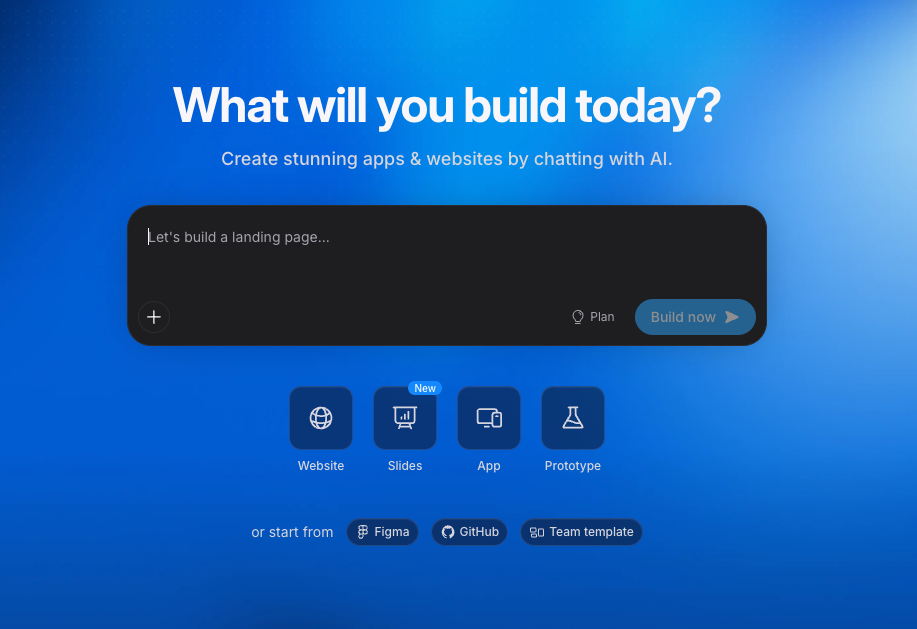
Used by: developers prototyping web apps in the browser.
Bolt.new is another AI app builder in the same mould as Lovable. Like Lovable, it gives you an AI-generated app or page and not much around it. It's built mainly for prototyping and website building — you won't find paid campaign landing pages among its templates.
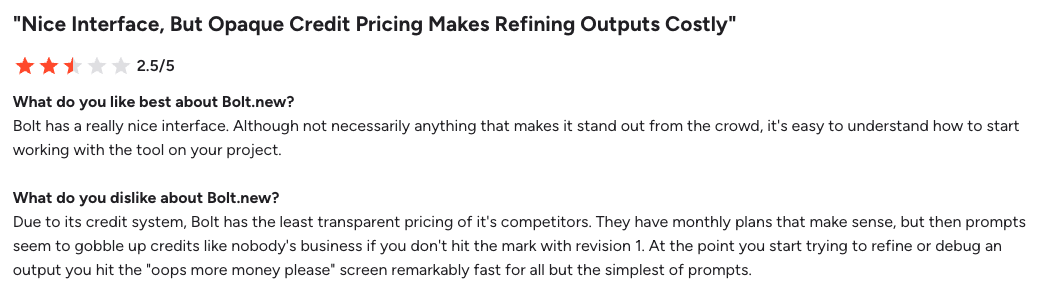
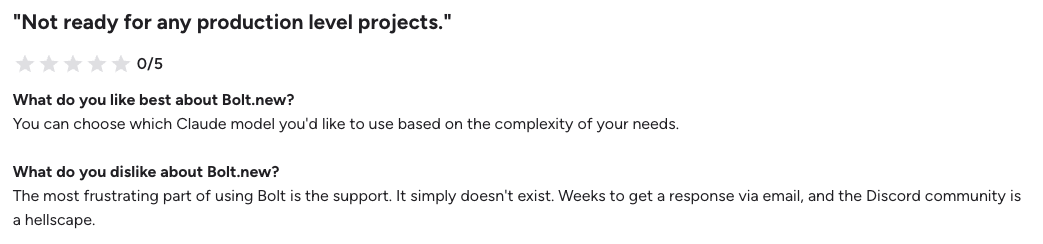
The thing reviewers flag most is token burn: when the agent makes a mistake, it tends to rewrite whole files to fix it, and that eats through your allowance fast.
Pricing
Bolt.new offers a free tier with 1 million tokens a month and a daily cap of 300,000 tokens. Pro starts at $18/month, billed annually.
Reviews
Source: G2
3. Replit
Used by: engineering teams working in a cloud IDE.
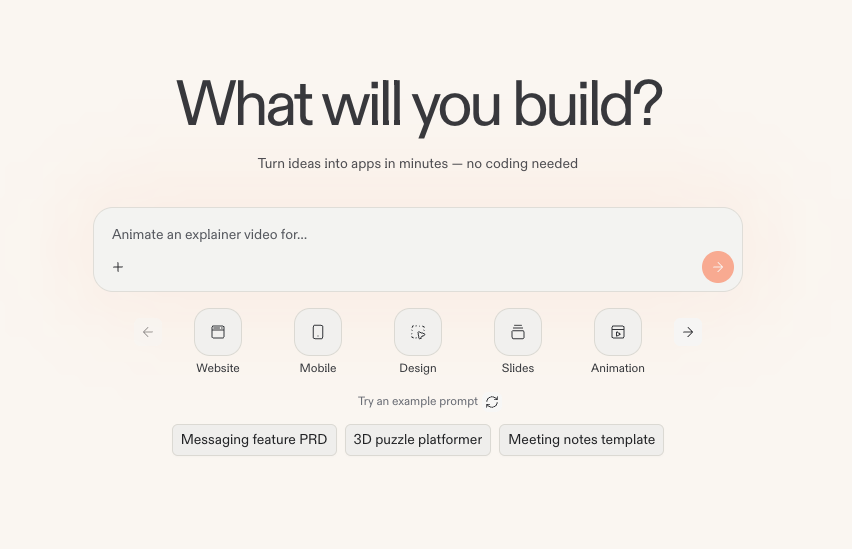
Replit is a developer-focused Lovable alternative. It's a full cloud coding environment with an AI agent, a Postgres database, and deployment built in.
For a marketer, it's a lot of machinery aimed at building software. You could force a paid-traffic funnel out of it, but only by wiring up a stack of other tools to qualify visitors, capture them, follow up, and tie results back to ad spend.
And like Bolt.new, Replit's plans have a fixed monthly price capped by usage that's hard to predict. That means the sticker price is rarely what you actually pay.
Pricing
Starter is free with one live project. Paid plans start at $18/month, billed annually.
Reviews
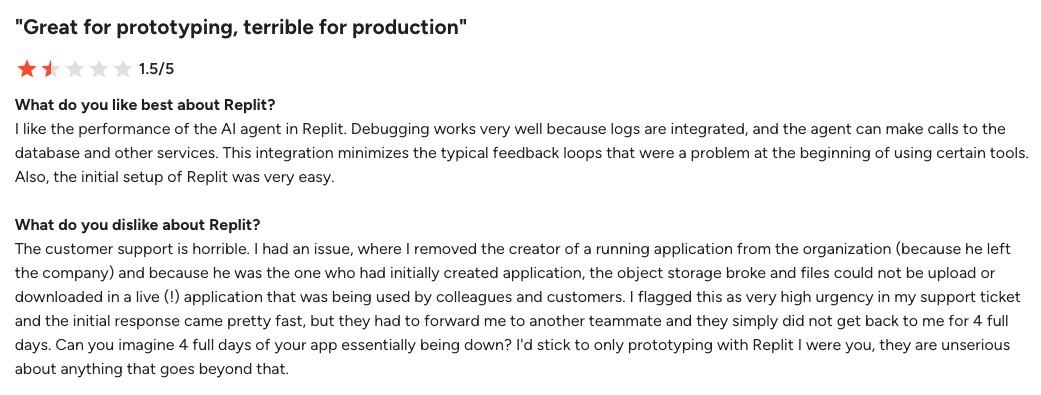
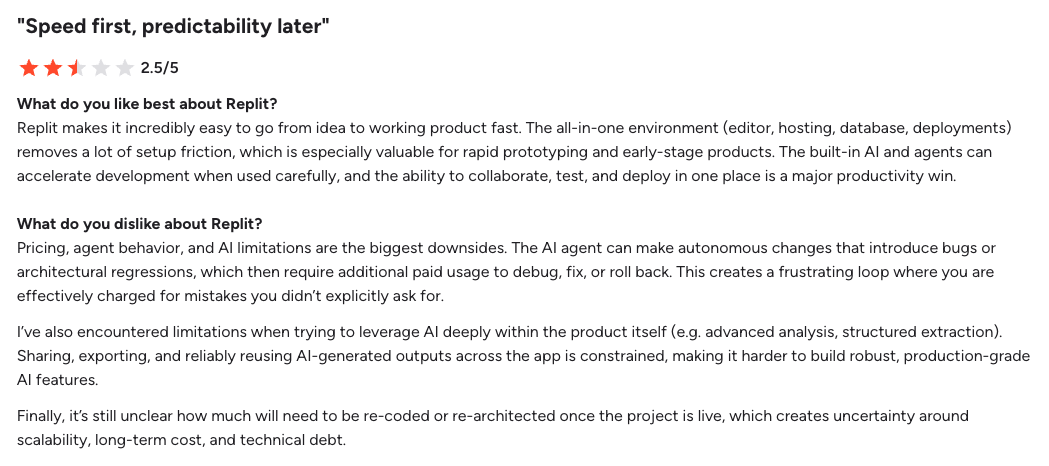
Source: G2
4. v0 by Vercel
Used by: developers building React and Next.js apps on Vercel.
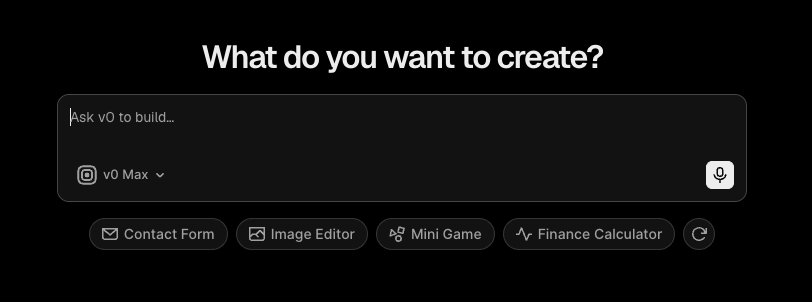
v0 is Vercel's AI builder. You prompt it and get a working app, including the frontend and backend, a database, and API connections, deployed to Vercel in a click.
v0's own quirk is how closely it's tied to the Vercel world; Next.js and Vercel hosting are the path of least resistance. Reviewers mention the agent getting stuck looping on complex logic.
Pricing
The free plan gives $5 of monthly credits and 7 messages (requests) a day. Paid plans start at $30/month with $30 of included monthly credits per user. That credit balance buys a few hundred generations. The meter climbs as you go, though: every message re-reads your growing project as context, eating up more and more credits every time.
Reviews
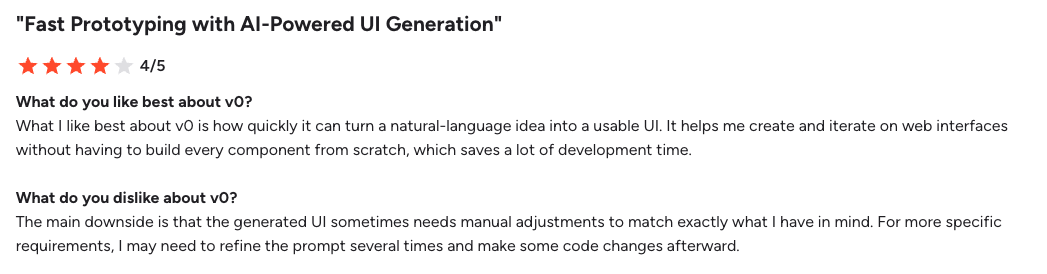
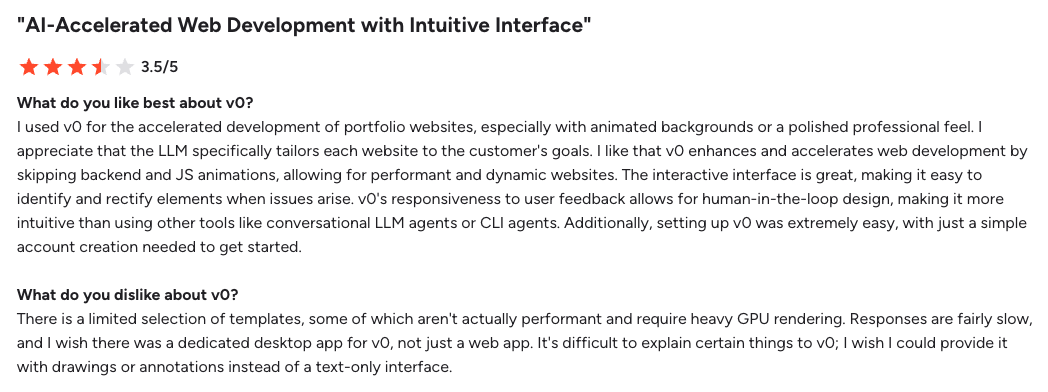
Source: G2
5. Base44
Used by: solo builders shipping internal MVPs.
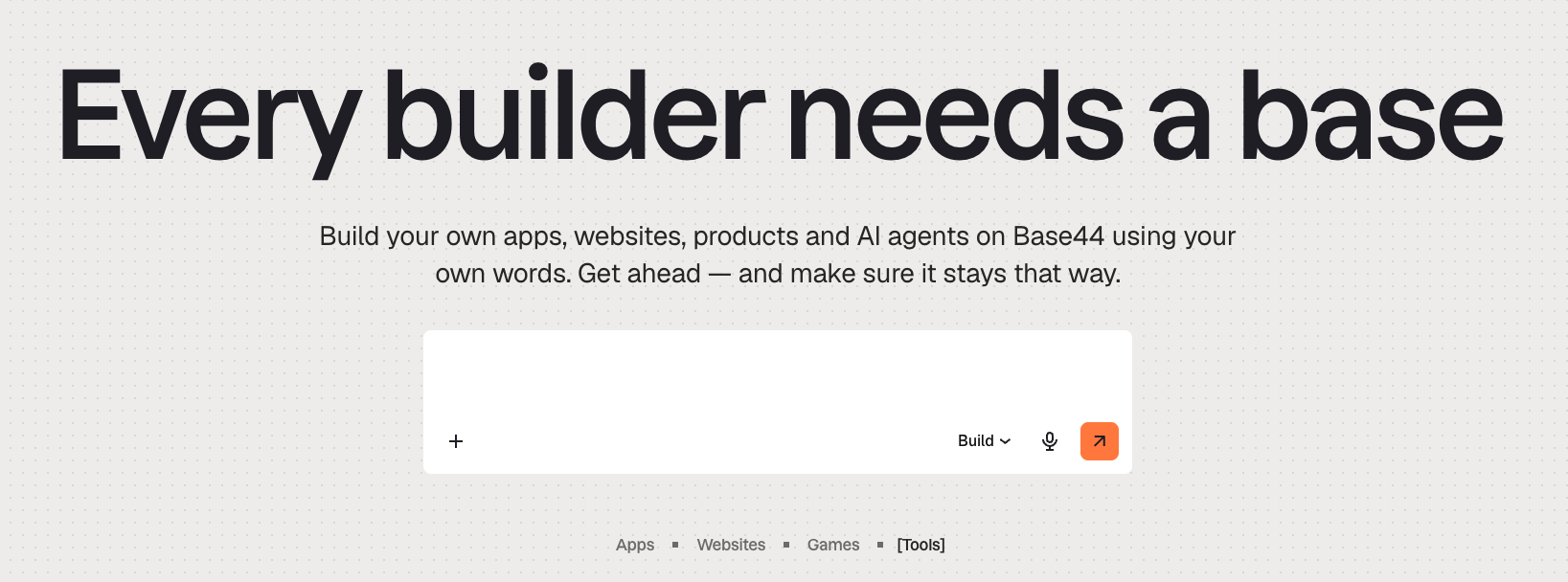
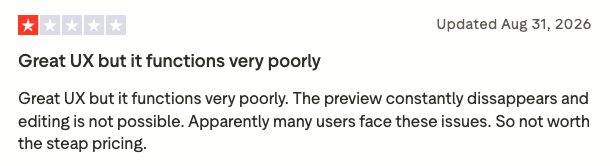
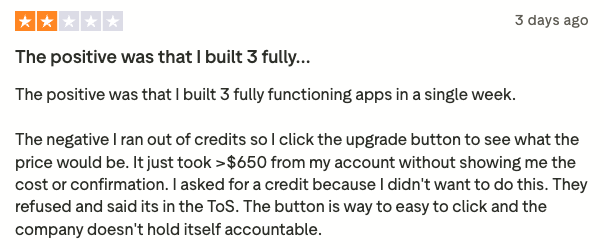
Base44 is Wix's no-code AI builder. It generates a full-stack app from one prompt with a managed database and login handled.
Of the tools here it's the one most squarely aimed at people who don't code, and it leans toward internal software: dashboards, client portals, lightweight CRMs, admin tools.
It's a general-purpose app builder, so a specific job, like running paid campaigns through to booked appointments, is something you'd assemble and wire yourself.
Pricing
The free plan gives 25 message credits a month. Paid plans start at $16/month billed annually, which includes 100 message credits plus 2,000 integration credits. A message credit is spent each time you prompt the AI to build or change something; integration credits cover actions to your connected tools.
Reviews
Source: Trustpilot
6. Bubble
Used by: no-code teams building database-driven web apps.
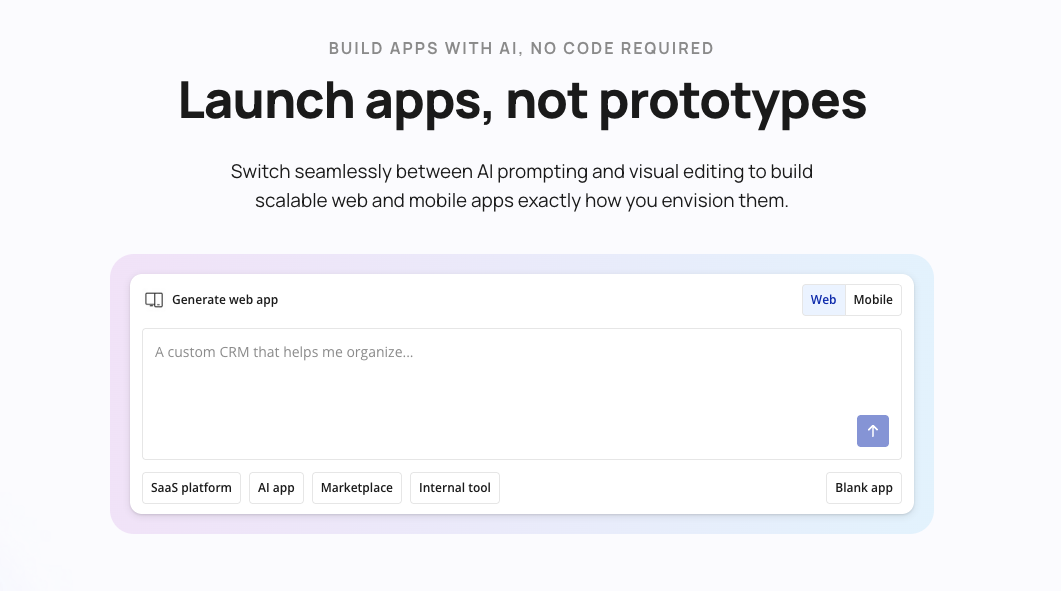
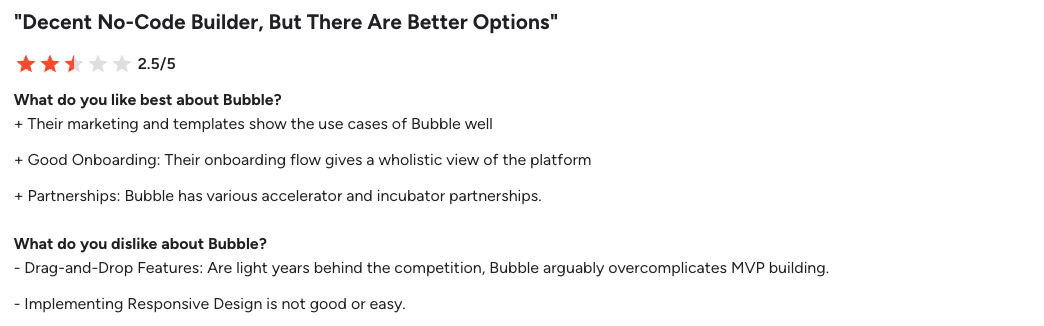
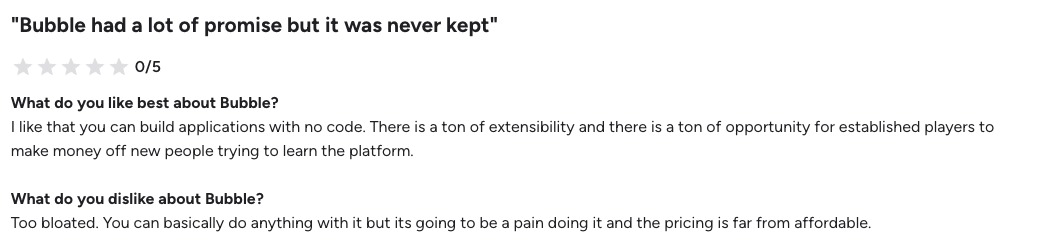
Bubble is a visual full-stack builder with its own database, workflow engine, and native mobile builds. It has an AI agent, so you can start from a prompt and drop into visual editing from there, but the visual editor is the point. Of the builders here, Bubble gives you the most to assemble and control by hand.
While Bubble offers landing page templates, they are basic one-pagers, not designed to qualify traffic. Its native email action is limited to one message at a time. Reviewers also tend to point to cost, the learning curve, and lock-in.
Pricing
Bubble sells web, mobile, and web plus mobile as three separate subscriptions. There's a free plan, then a web Starter at $29/month billed annually with a custom domain, basic version control, and recurring workflows. Mobile starts around $42/month; combined starts at $59/month.
Reviews
Source: G2
7. Cursor
Used by: software engineers editing code in an AI editor.
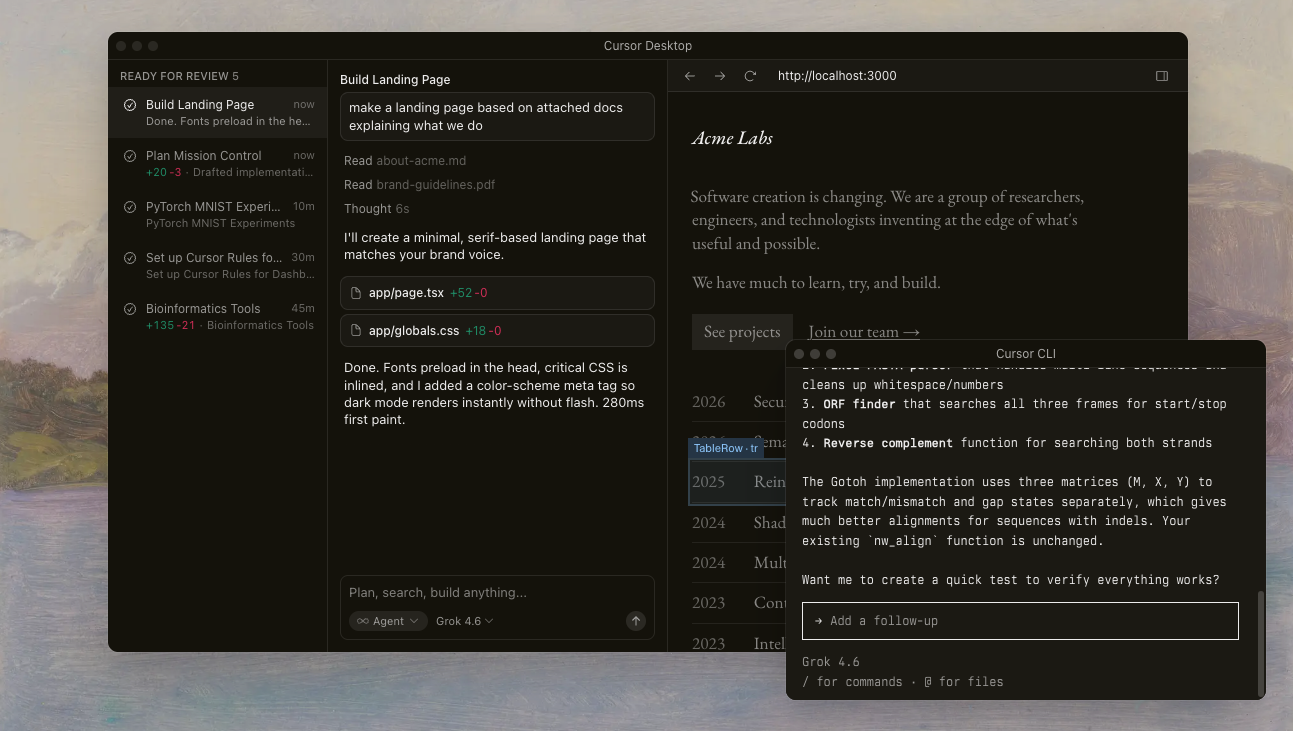
Cursor is an AI code editor built on VS Code. It's not a prompt-to-app builder.
You can build a page in Cursor, but only the way a developer would: writing and editing code, with the agent refactoring and debugging inside a real codebase. For a marketer it's the long way round.
Pricing
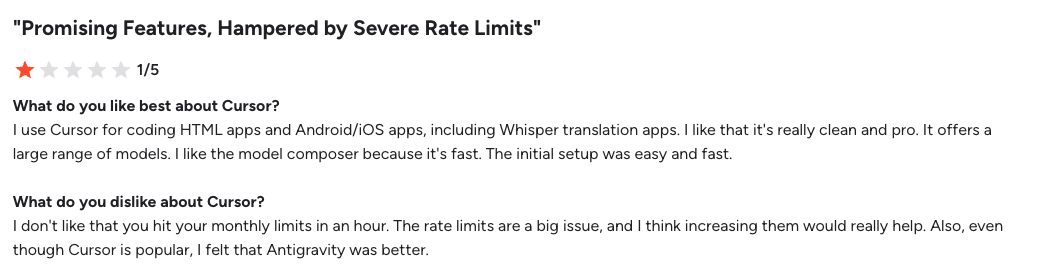
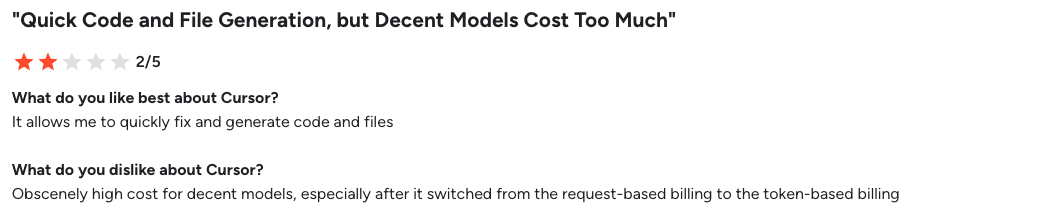
Hobby is free with capped usage. Pro ($16/month on annual billing) includes about $20 of usage.The paid tiers mostly buy you more of model usage.
Reviews
Source: G2
.png)
8. Framer
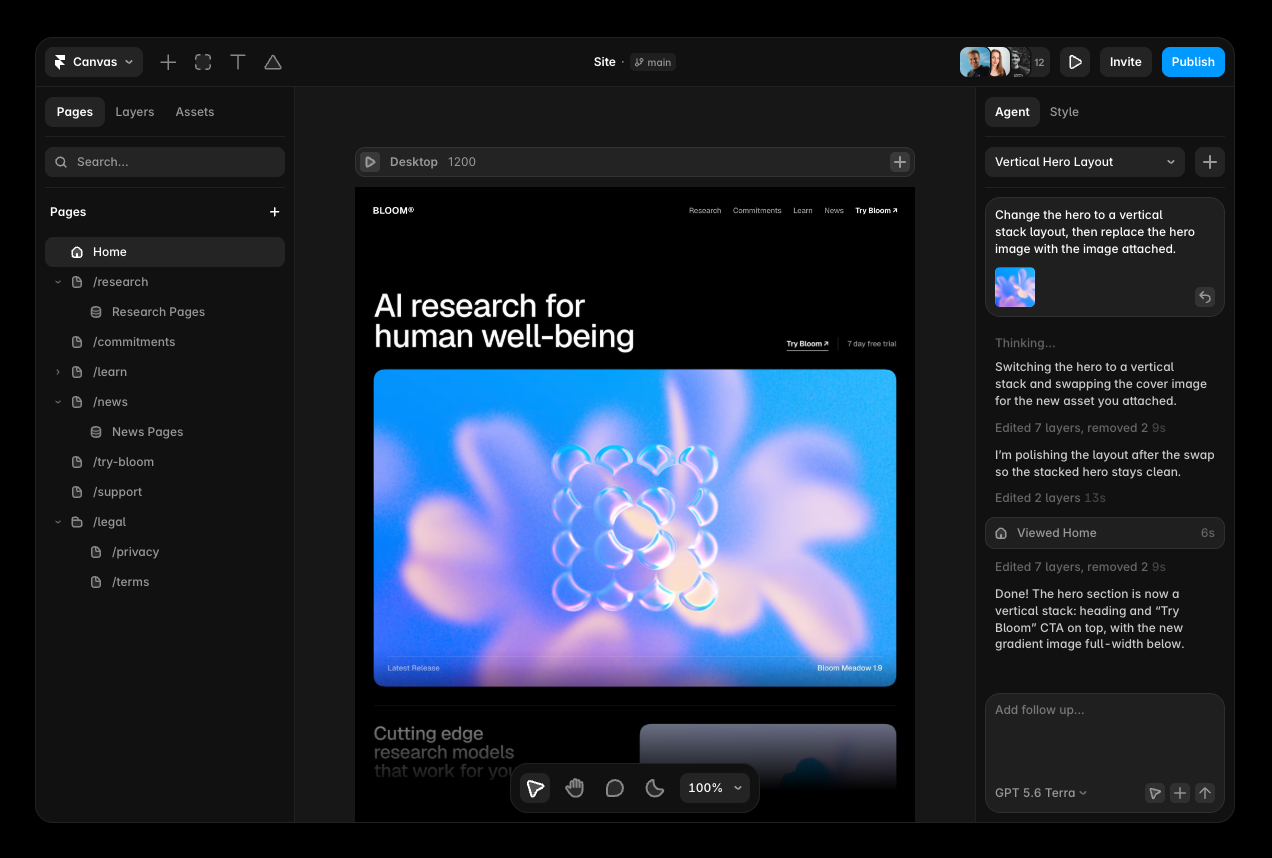
Used by: designers publishing marketing sites.
Framer is a website builder with a CMS, native forms, and AI agents. As a Lovable alternative, it gets a designed page live quickly.
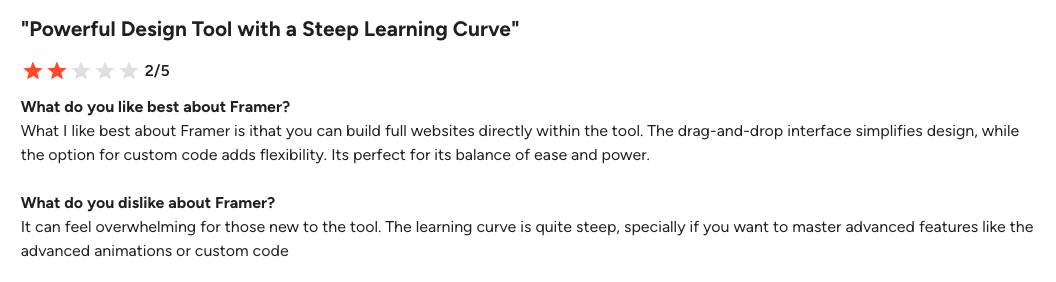
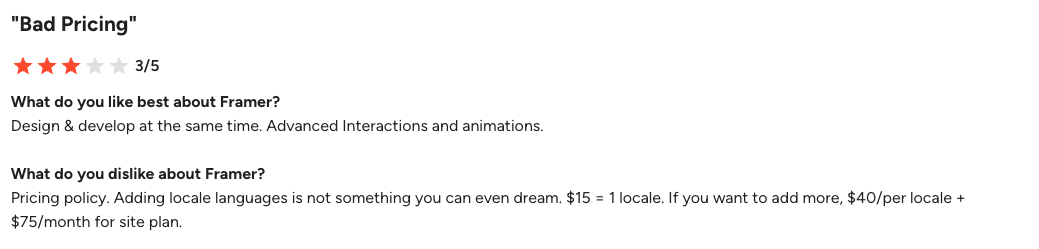
The web page is the whole offer, though. There is no contact management, and native email is one submission notification. Reviewers complain about pricing that scales quickly and thin permissions.
Pricing
The free plan includes 500 agent credits. At $10/month, it offers 1,000 AI credits. A/B testing can only be added on a $30/month plan for extra $50/month, on annual billing.
Reviews
Source: G2
9. Webflow
Used by: in-house web teams managing site content.
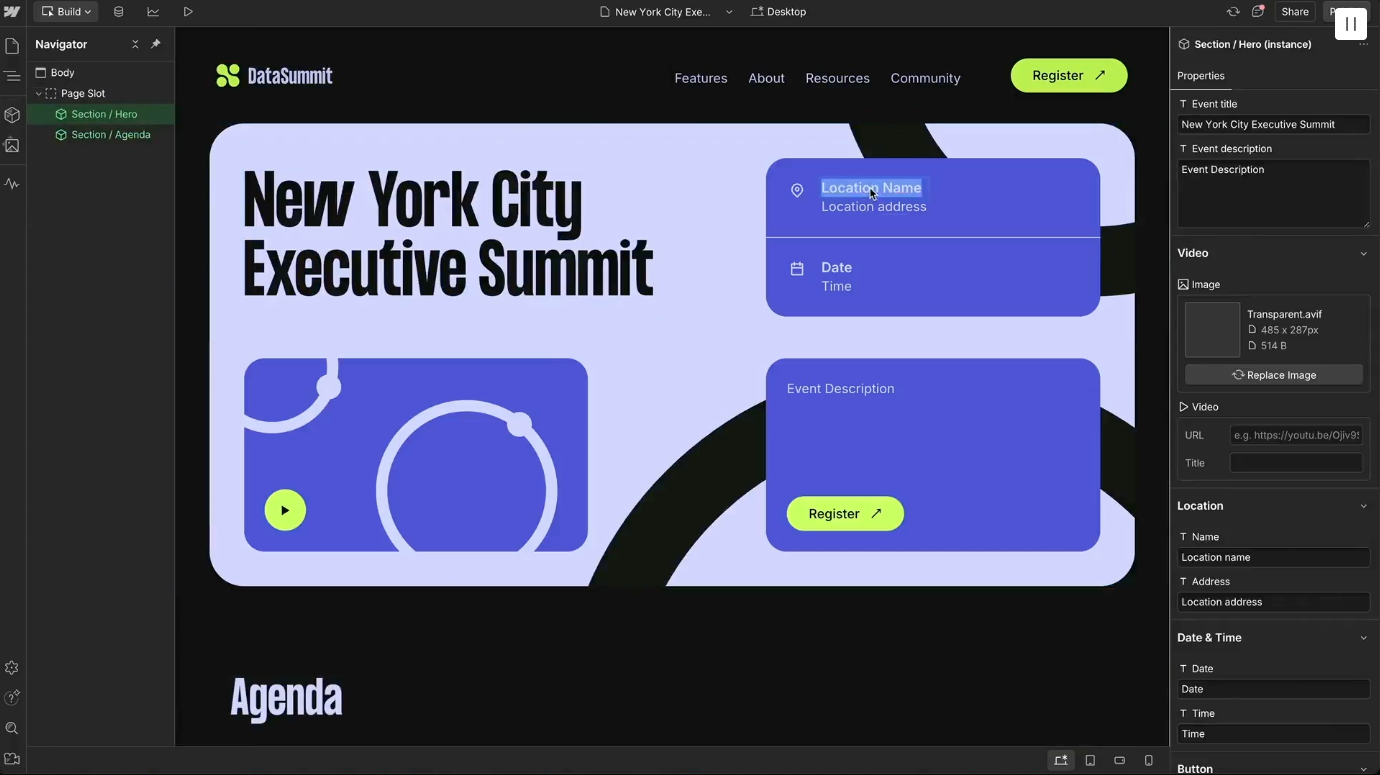
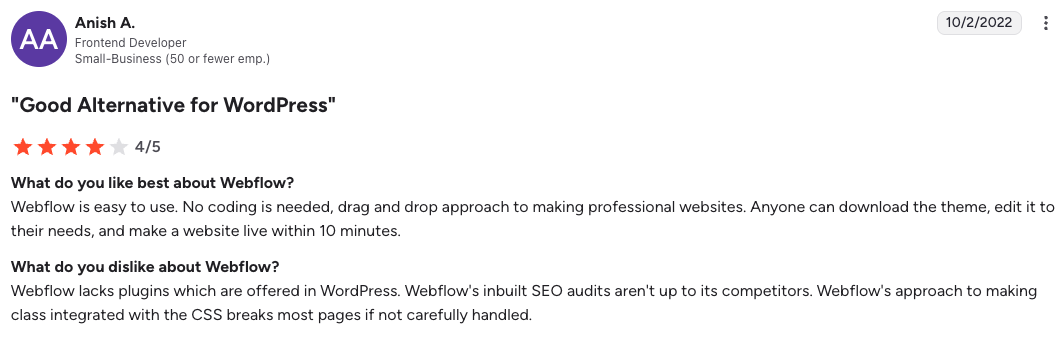
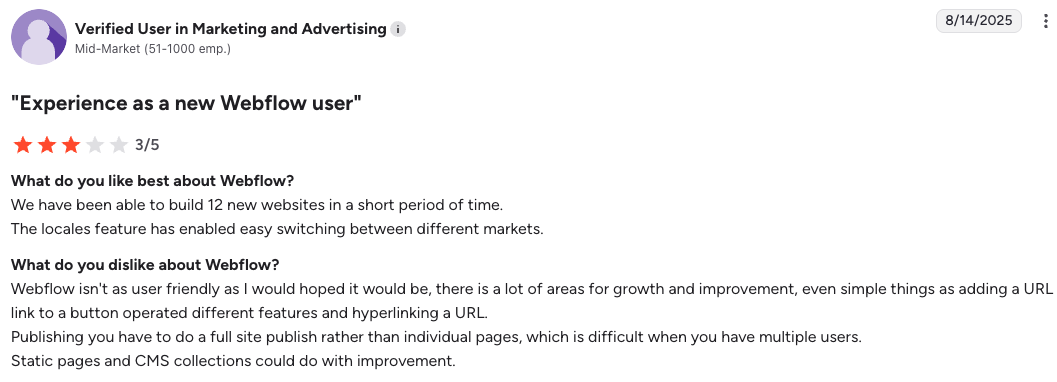
Webflow is where teams leaving Lovable for more control over the page often land on. It's a visual designer that outputs production HTML, CSS, and JavaScript, with a CMS and lead generation forms.
It now has Webflow AI for generating sections, copy, and code components, but the visual canvas is still the heart of it. It has no built-in contact management or email follow-up, and conversion or ad tracking come through integrations.
Traffic is capped on every tier — something to weigh if you're planning a paid traffic campaign.
Pricing
The free plan caps form submissions at 50 and 1 GB of bandwidth (roughly 250 monthly pageviews). Basic ($15/month billed annually) adds a custom domain and raises bandwidth to 10 GB.
Reviews
Source: G2
10. Dyad
Used by: developers running an open-source builder locally.
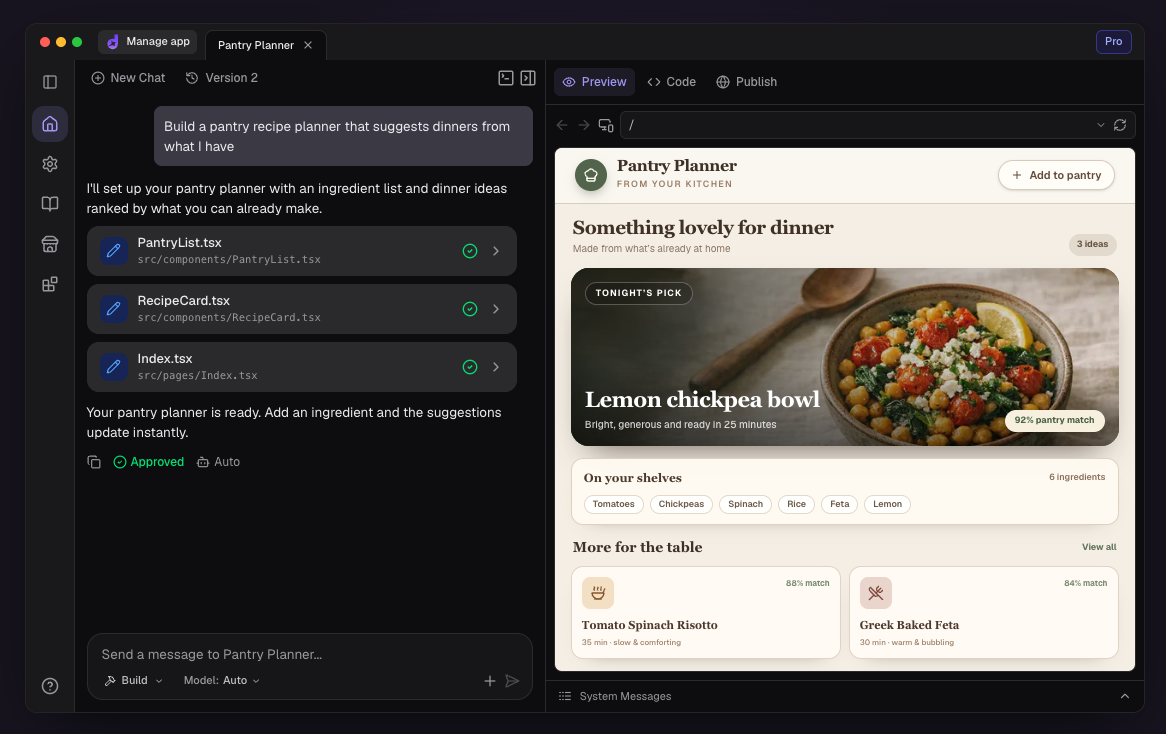
Dyad is the open source Lovable alternative that runs on your own machine and builds full-stack web apps (database, auth, deploy to GitHub or Vercel). You plug in your own model keys, i.e., OpenAI, Anthropic, Ollama, and it generates code you can open in VS Code.
Its use case is squarely technical: building and prototyping software privately, offline, without a platform in the middle or a subscription. Dyad is for developers who want to run everything themselves, not marketers who need a campaign live.
Pricing
The core app is free and open source; you pay your own model provider. Dyad Pro is $20/month, Dyad Max $79/month.
Reviews
No G2 reviews are published for Dyad yet.
FAQs: Lovable alternatives
What is the best Lovable alternative?
Perspective is the best Lovable alternative for anyone running ads. You get a complete funnel with qualifying steps, contact management, and WhatsApp and email follow-up inside 60 seconds, with tracking and integrations connected at launch. To build your first funnel with AI, start your 14-day free trial.
What are some alternatives to Lovable?
The most common Lovable AI alternatives are Perspective, Bolt.new, Replit, v0 by Vercel, Base44, Bubble, Cursor, Framer, Webflow, and Dyad.
Is there a free or open source Lovable alternative?
Dyad is free and open source, runs on your own machine with your own model keys, and exports code you keep.
Perspective offers a free plan for building funnels with AI.
Why are people looking for Lovable competitors?
Cost predictability is the first reason people are looking for Lovable alternatives. Builds, cloud usage, and model calls draw from one credit balance, and a debugging loop can consume a month of credits in an afternoon.
Scope is the second. Lovable ships an app, so teams searching for Lovable alternatives want a tool that serves a more specific use case.
How much do Lovable alternatives cost?
Entry prices run from about $10 a month at the low end to a few hundred at the top. But almost all of them run on a credit system. The more you build, the higher the real cost bill climbs, and the harder it is to predict.
The Lovable alternative built for higher conversions
If you're looking for a Lovable alternative that gives you:
✔️ A complete funnel launched in minutes from one prompt
✔️ Mobile-first funnels built for paid traffic, not static pages
✔️ Qualifying steps that filter visitors before they convert
✔️ Built-in CRM with every lead and every answer on one record
✔️ WhatsApp and email follow-up inside 60 seconds
✔️ A free plan with AI credits and MCP access
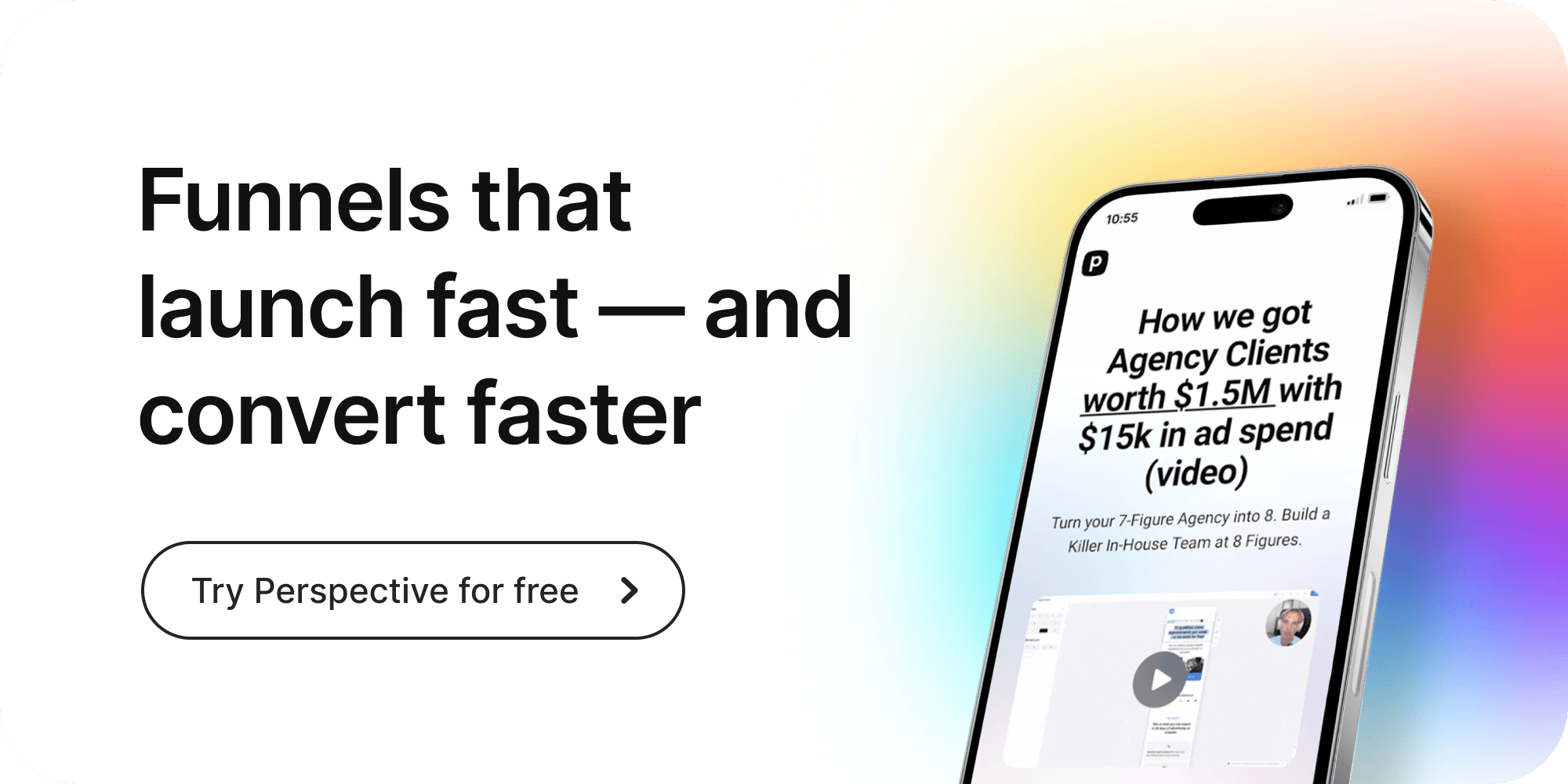
Then Perspective is clearly the best alternative to Lovable. Start your free trial of Perspective.
.png)