This guide compares 9 mobile landing page builders: Perspective, Carrd, Elementor, Webflow, MailerLite, Leadpages, Instapage, Swipe Pages, and Unbounce. Perspective and Swipe Pages build pages for the phone first, and Perspective also follows up with each lead on WhatsApp or email within 60 seconds of a submission. The table shows what each tool fits best.
Tool | Key features | Best for |
Mobile-first AI funnels, built-in CRM, 60-second follow-up | Teams turning paid traffic into booked appointments | |
Carrd | One-page sites, forms from Pro Standard | Solo founders publishing a single simple page |
Elementor | WordPress page builder plugin, Pro form widget | WordPress site owners editing pages in-house |
Webflow | Visual website builder with CMS and forms | Design teams building multi-page marketing websites |
MailerLite | Email platform with landing page editor | Newsletter senders adding a basic signup page |
Landing page templates, forms, A/B testing from Grow | Small businesses publishing standard opt-in pages | |
Landing pages for ad campaigns, visitor caps | Enterprise ad teams with larger software budgets | |
AMP landing pages, mobile slides format | Marketers needing standalone pages | |
Landing pages, A/B testing, traffic-based plans | Agencies managing many standalone landing pages |
Prices are in US dollars.
A mobile landing page builder is a tool for creating landing pages that are designed for the phone screen first. Layouts, forms, and buttons are sized for thumbs and small viewports.
Builders handle mobile in two ways. Mobile-first builders design every page for the phone and scale it up for desktop. Responsive builders design for desktop and shrink the page to fit smaller screens. The right choice depends on whether your campaigns run on mobile only or across devices.
We compared 9 mobile landing page builders on mobile layout, lead capture, and what happens after a visitor taps your form.
What are mobile landing page builders?
Mobile landing page builders are software for creating and publishing landing pages, with the phone layout designed first. Every section, form field, and button is built for a small touchscreen.
The best ones carry the visitor past the page itself, so qualification, follow-up, and reporting happen in the same place.
9 best mobile landing page builder tools: in detail
Each landing page builder on this list offers mobile-friendly layouts. Only a few design for the phone first, while the rest start with a desktop layout and adapt.
1. Perspective
At a glance
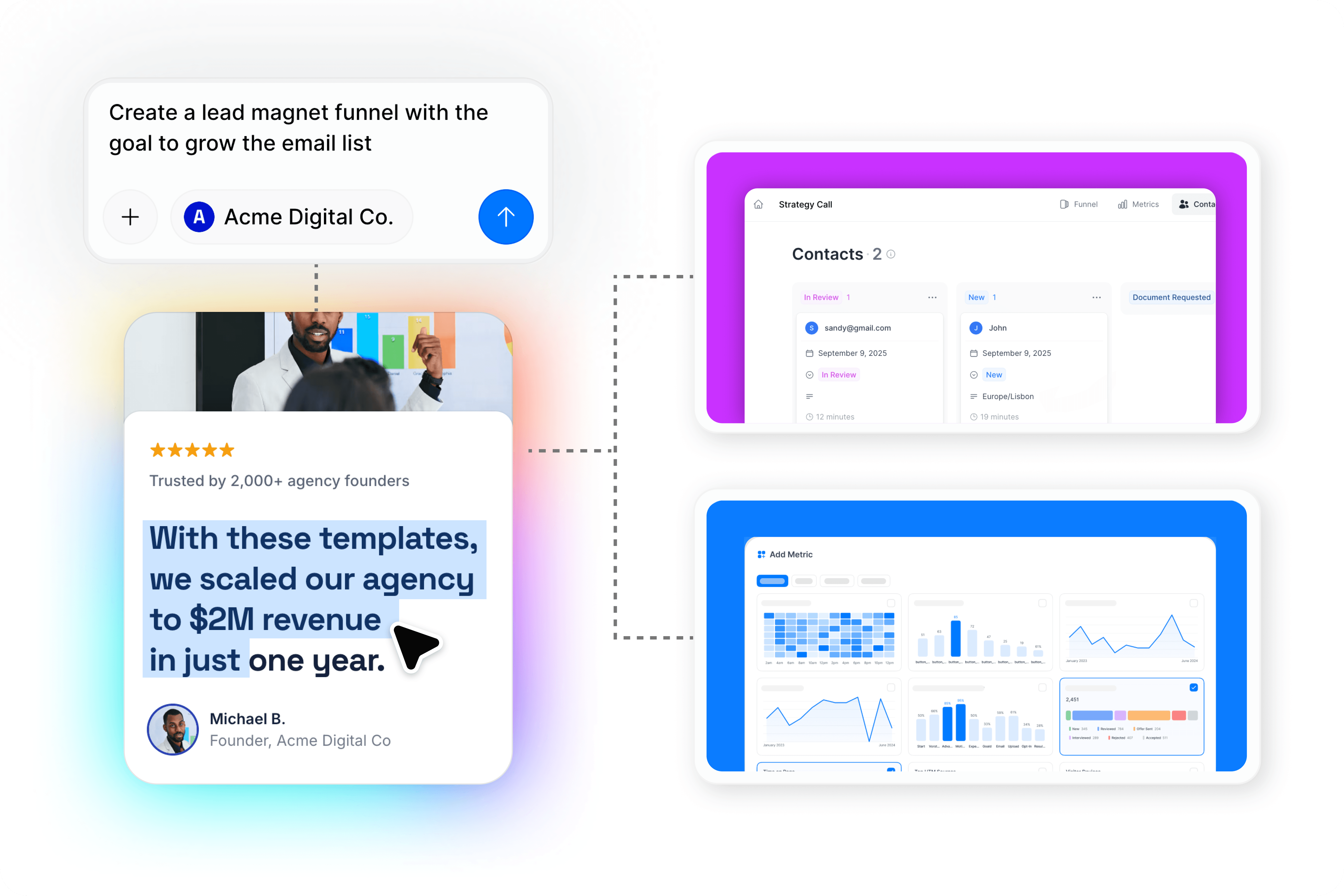
Perspective is an AI funnel builder for performance marketers running paid ads. It builds interactive funnels that qualify visitors and let them book appointments. It also follows up with each lead on WhatsApp or email within a minute.
What makes it stand out
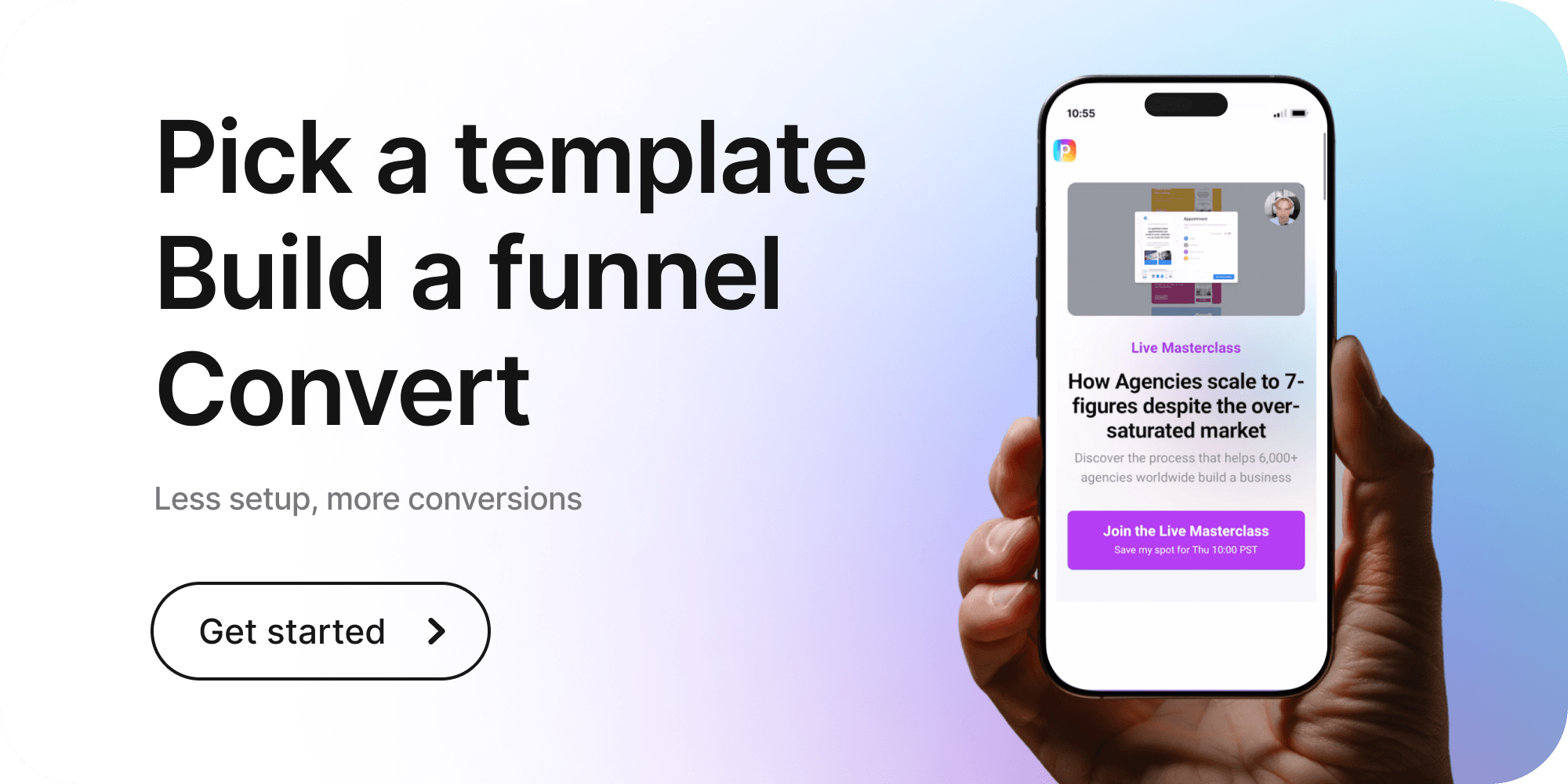
Perspective is built mobile-first. Each screen holds one question or action, with answers people tap to select. Moving through a funnel feels like using an app, and visitors can finish it with one thumb.
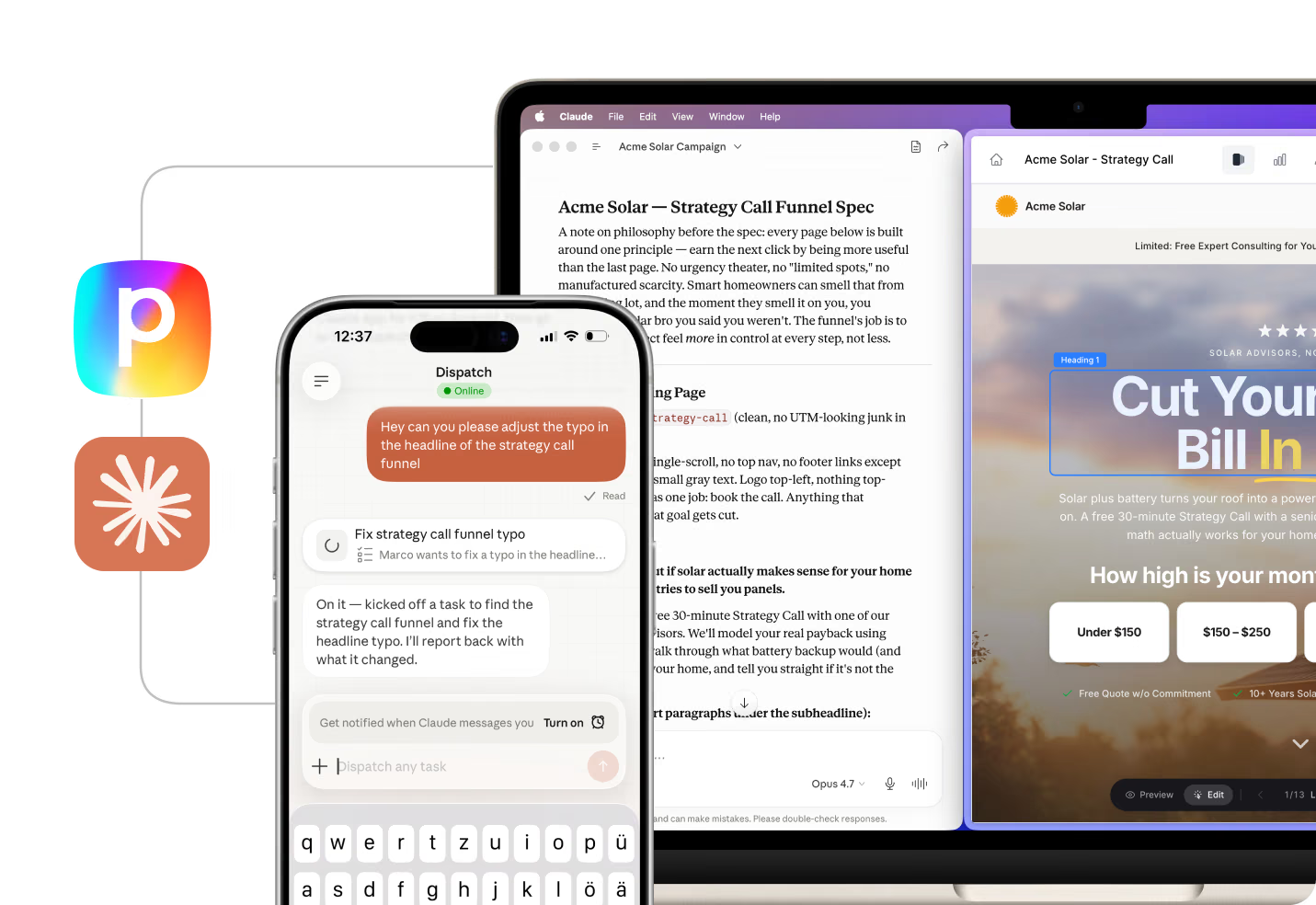
You can start from a proven mobile-first template or let AI build your page from a prompt. Or, with the Perspective MCP, which connects Perspective to Claude, you can describe the funnel in a chat and get it live with hosting, tracking, contacts, follow-up emails, and Meta conversion tracking set up.
However the funnel is built, you can then edit it by hand in Perspective: double-click a headline, drag a section, delete a block, undo anything. This way, you don't spend AI credits perfecting your mobile page.
How it compares
Several builders on this list start with a desktop layout and adapt it for mobile. Perspective designs for the phone first.
Perspective takes a lead from ad click to booked appointment in one place.
Key features
- Mobile-first funnel editor with hands-on editing of AI-built funnels
- Funnel blocks for appointment scheduling, payment, file upload, and input verification
- Built-in CRM with every lead and every answer on one record
- WhatsApp and email sequences triggered automatically on submission
- Integrations with GoHighLevel, HubSpot, Make, and Meta CAPI, and connections to more than 6,000 tools through Zapier
Pricing snapshot
Perspective starts from $47 a month, billed yearly ($59 billed monthly), and every plan starts with a 14-day free trial. People who sign up through the Perspective MCP get a free plan.
Strengths
- Designed for the phone first, with an app-like flow of one step per screen
- Tap-to-select answers that make funnels easy to finish on a phone
- Follow-up inside 60 seconds on WhatsApp and email, while the lead is still on their phone
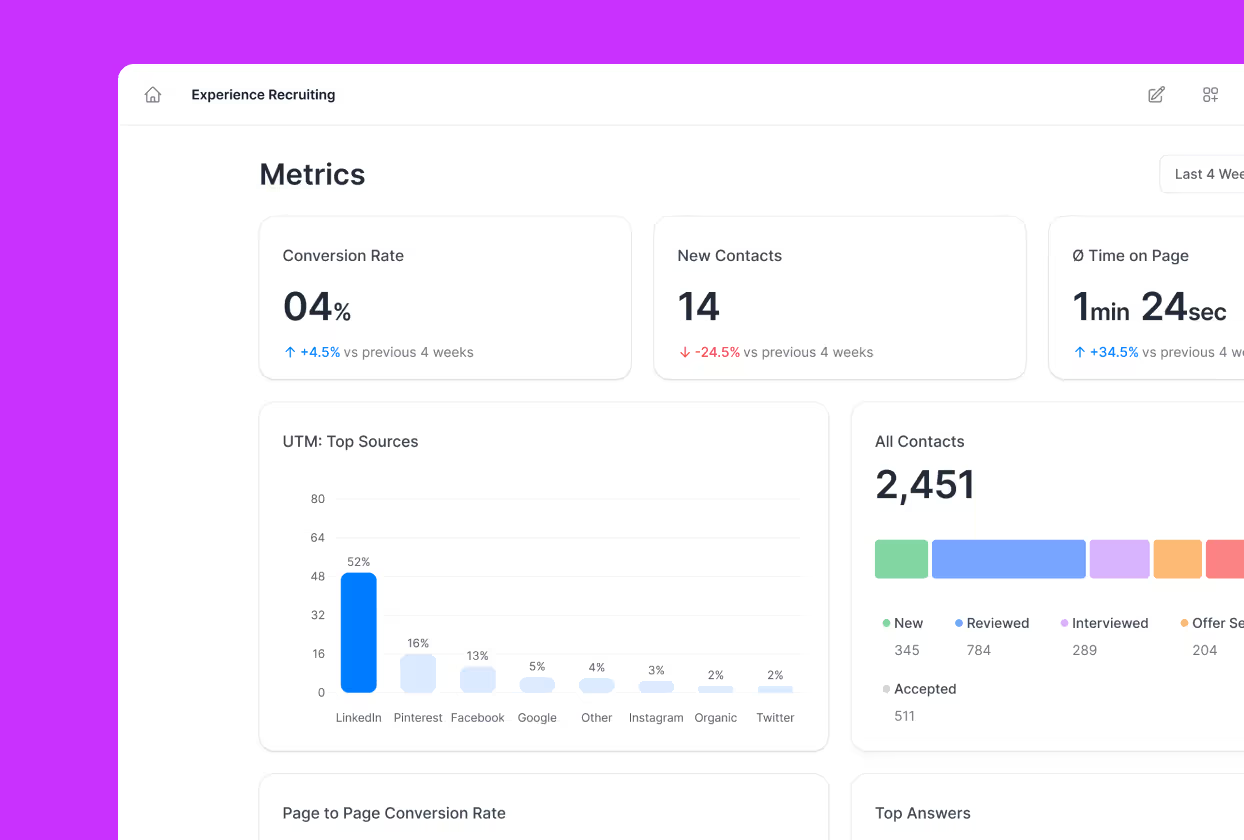
- Funnel behavior, ad spend, and lead outcome tracked in one place
- AI trained on $1 billion in ad spend, with more than 100,000 funnels built on Perspective
Limitations
- Built for funnels and lead generation, so it isn't an all-in-one marketing suite
Use case
Perspective suits performance marketers, agency owners, and founders who run Meta and Google ads and answer for the results.
Quincy Janssen, a Google Ads consultant, generated over 300 leads within days, at a cost per lead below the usual range for his niche. He describes Perspective as “fast, clean, mobile-first.”
The best test is your own traffic: spin up one funnel and track the results.
2. Carrd
Carrd is a low-cost builder for simple one-page websites. People use it for quick landing pages, personal profiles, and email signup pages.
Key features
- One-page site builder with templates, including Pro-only premium templates
- Responsive layouts that adjust to phone, tablet, and desktop
- Contact and signup forms
- Widgets and code embeds for Stripe, PayPal, and Gumroad buttons, or tracking scripts
- Built-in cookie-free analytics, or Google Analytics, Plausible, and Matomo
Pricing snapshot
The free plan publishes up to three sites without a custom domain. Contact forms, widgets, and analytics are only supported starting with Pro Standard at $19/year.
Strengths
- Publishes a single page in a few minutes
- Very low cost
- Templates that hold up on a phone screen
Limitations
- Ad tracking means pasting pixel code into an embed, which needs Pro Standard or above
Use case
Carrd suits freelancers, creators, and small businesses that need a clean one-page site live fast on a small budget.
3. Elementor

Elementor is a WordPress page builder plugin. You need a WordPress site to build mobile landing pages with it.
You can change sizes and spacing for each device or hide sections on mobile.
Key features
- Drag-and-drop editor with responsive controls for desktop, tablet, and mobile
- Form builder on every Pro plan (form submissions from Advanced Solo), popup builder on Advanced Solo and up
- Form integrations with marketing tools
- WooCommerce widgets on Advanced Solo and up
- AI tools for copy, images, code, and layouts
- Collaborative notes on Advanced Solo and up
Pricing snapshot
The free plugin covers the core drag-and-drop editor and basic widgets. It has no form builder, popup builder, or Theme Builder.
Pro plans are billed yearly and start at $60 for one site. That Essential plan doesn't collect form submissions, which start on Advanced Solo.
Strengths
- Large WordPress plugin library for adding features
- Good fit for teams that already run their site on WordPress
Limitations
- Needs a WordPress site
Use case
Elementor fits marketers and agencies that already run sites on WordPress and want full design control over landing pages.
4. Webflow
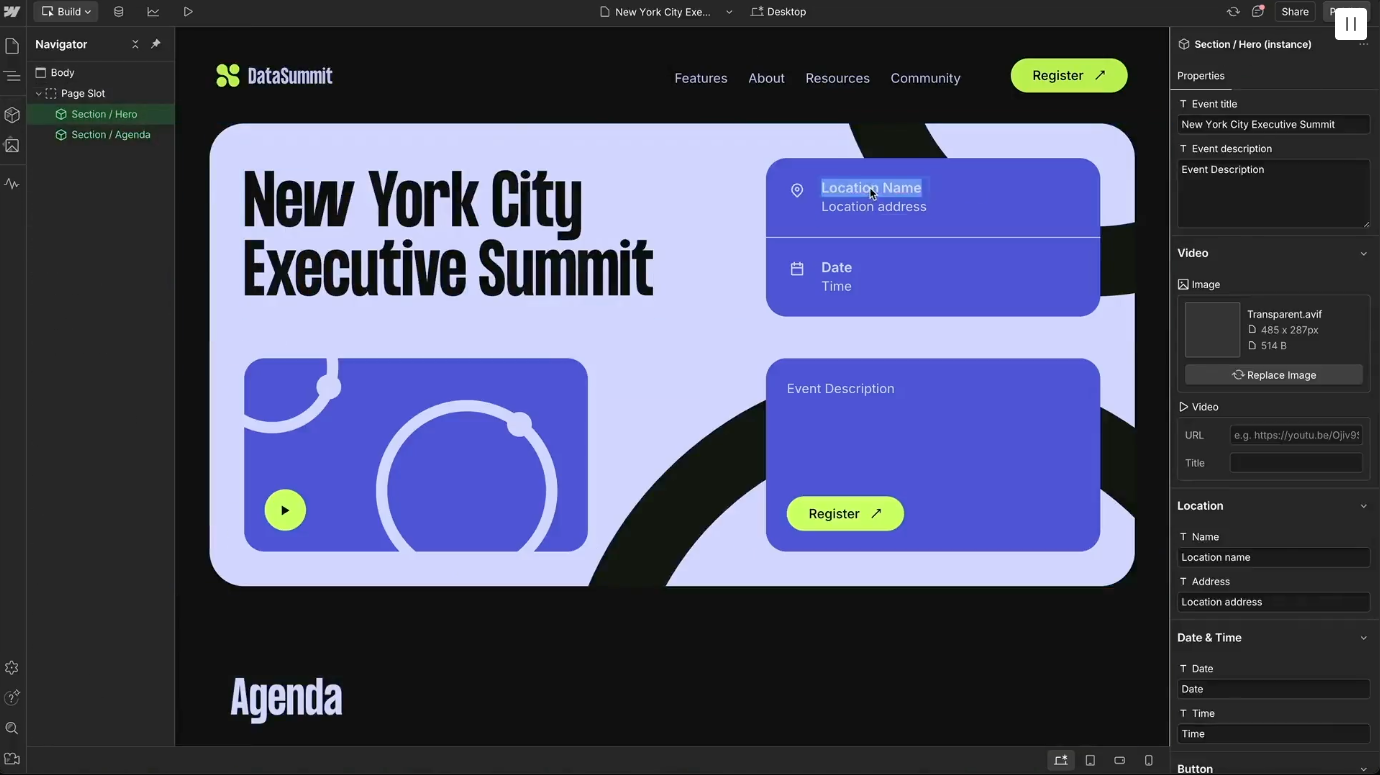
Webflow is a visual website builder for designing and hosting multi-page marketing sites.
As with most site builders, design starts on desktop, and every choice there carries down to tablet and phone layouts. You can override any setting at smaller breakpoints, so it's quite possible to build a polished mobile page with Webflow.
Key features
- Visual CSS-based designer
- Overrides for any style at tablet and mobile sizes
- Native forms
- CMS for blogs, case studies, and other dynamic content on Premium
- Built-in hosting with custom domains on paid plans
- Webflow AI that builds a site or a section from a prompt, plus an MCP server
- Localization and A/B testing as paid add-ons
Pricing snapshot
Webflow's free plan publishes two static pages on a webflow.io domain. It caps form submissions at 50 and bandwidth at 1 GB a month, which suits a test page rather than a live ad campaign.
Paid plans start at $15/month billed yearly. It adds a custom domain, unlimited form submissions, and 10 GB of monthly bandwidth. A/B testing through Webflow Optimize is a separate paid add-on.
Strengths
- Layout and styling control without code
- Built for brand-heavy, multi-page sites
Limitations
- Design starts on desktop and carries down to tablet and phone
Use case
Webflow suits designers and marketing teams building a full website with a strong visual brand.
5. MailerLite
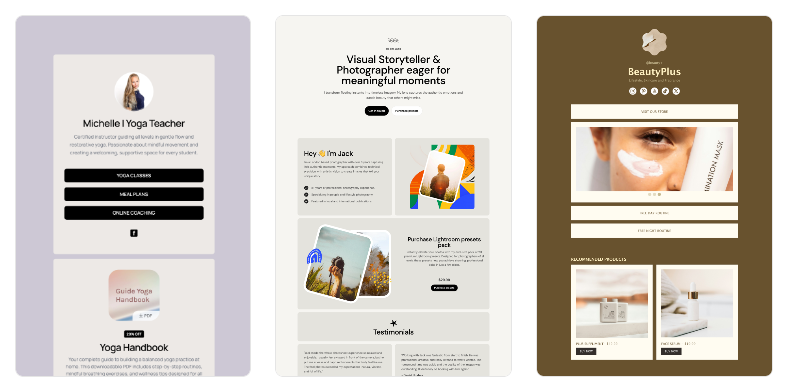
MailerLite is an email marketing platform with a built-in landing page builder.
You can generate a page from a prompt with MailerLite's AI.
Key features
- Drag-and-drop landing page builder with templates
- AI landing page generator
- Surveys, quizzes, and pop-ups
- Signup-triggered email automations
- Landing page A/B testing
- Analytics
Pricing snapshot
The free plan covers 250 subscribers and one landing page. MailerLite's paid plans start at $10.80 a month, billed yearly ($12 billed monthly).
Strengths
- Signup page and email list in one account
- AI page generation and A/B testing at a low price
Limitations
- Comfort comes with email support below 50,000 subscribers; Power adds live chat
Use case
Most MailerLite users are newsletter senders who need a signup page attached to a list. It works for lead magnets, course launches, and coming-soon pages.

6. Leadpages
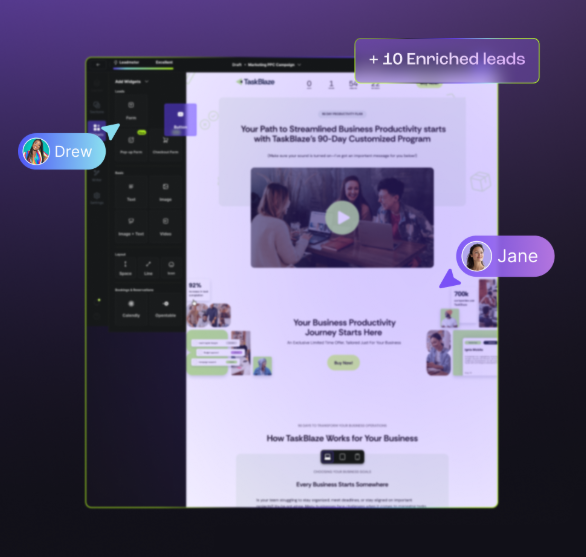
Leadpages is a landing page builder with a focus on conversion rate optimization (CRO).
Its AI builds a page from a prompt, and its MCP connector publishes pages from Claude or ChatGPT. Pages use standard web layouts that adapt to phone screens.
Key features
- AI page generator and templates
- A/B and multivariate testing
- Forms and webhooks
- Integrations with HubSpot, Salesforce, Stripe, and Shopify
- Anonymous visitor detection and lead enrichment
Pricing snapshot
Leadpages starts at $29 a month, billed monthly, on a plan for publishing only. A/B testing starts on the Grow plan at $99 a month, billed monthly.
Strengths
- Fast page creation with AI
- Built-in testing and optimization tools on higher plans
- Unlimited traffic on every plan
Limitations
- The $29 Pro plan is for publishing only, with no A/B testing
Use case
Leadpages suits small businesses and marketers publishing opt-in, webinar, and offer pages. It works best when the page's job ends at form submission.
7. Instapage
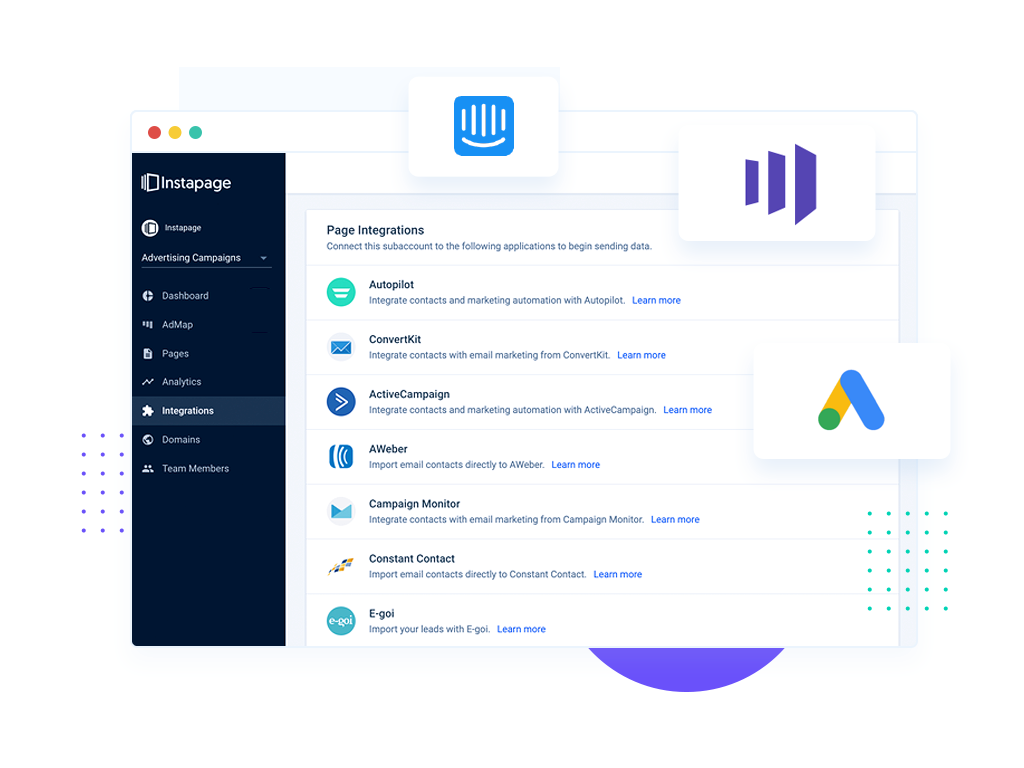
Instapage is a landing page platform for campaign pages.
Key features
- Drag-and-drop builder with AI content generation
- Reusable page blocks and forms
- Popups and sticky bars
- Server-side A/B testing
- Multi-step forms on Optimize
- Ad-to-page personalization on Convert
- Real-time visual collaboration
Pricing snapshot
Instapage has one of the highest starting prices on this list. Plans start at $79 a month, billed yearly ($99 billed monthly), with a cap of 15,000 visitors a month. A/B testing needs the Optimize plan at $159 a month, billed yearly.
Strengths
- Reusable blocks across campaign pages
- Fast-loading mobile pages, powered by Instapage's Thor Render Engine
Limitations
- Every plan caps monthly visitors
- High entry price
Use case
Instapage suits in-house ad teams and agencies running many campaign pages with a budget for testing.
8. Swipe Pages
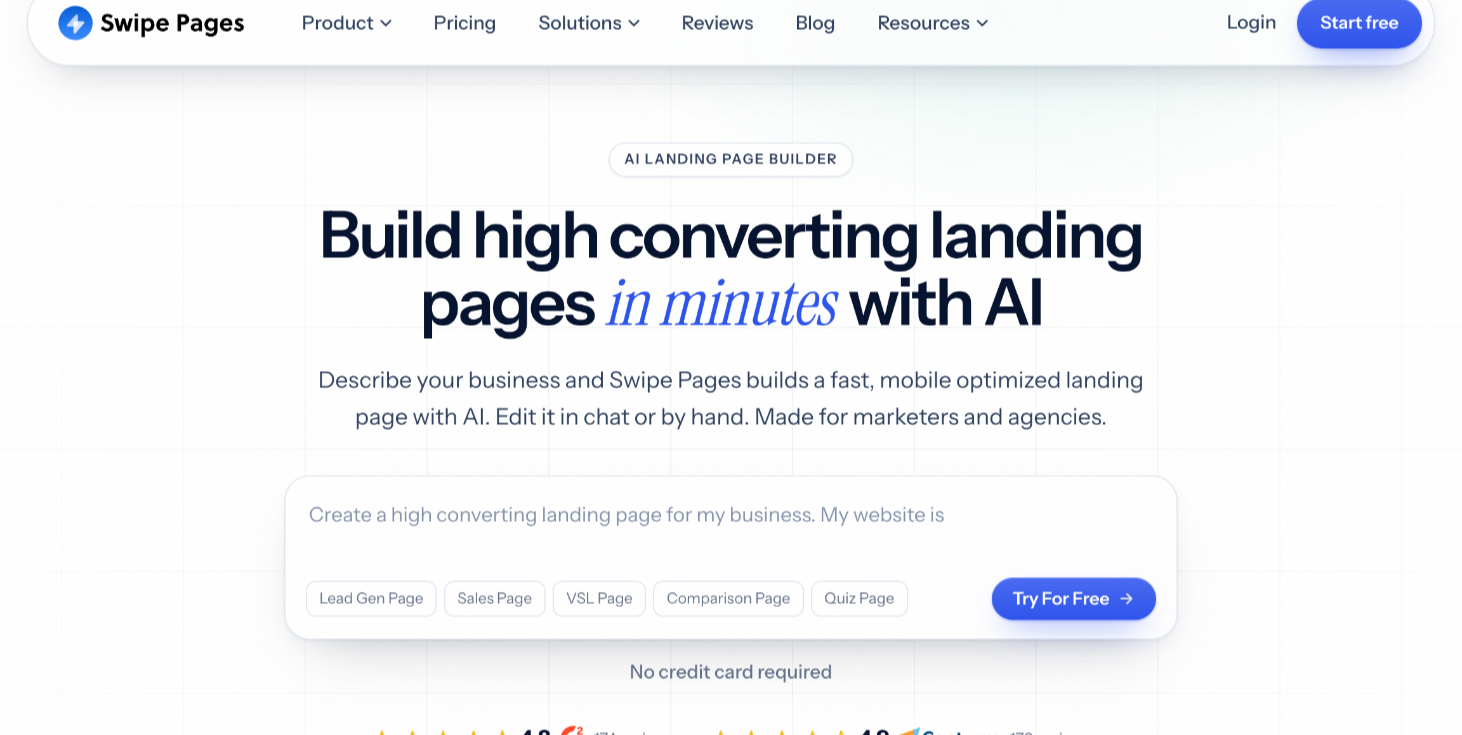
Swipe Pages is a landing page builder for ad campaign pages, with a focus on mobile.
Its AI builder lays out pages for phones, and you can adjust them in chat or with drag and drop. Pages built in the drag-and-drop builder can publish as AMP pages, and Smart Pages send phone visitors to app-like Mobile Slides.
Key features
- AI page builder and mobile-first layouts
- AMP pages and swipeable mobile slides
- Lead quizzes and multi-step forms
- Sticky CTA, click-to-call, and floating WhatsApp buttons
- Lead magnet delivery and lead notification emails
- Stripe, PayPal, and Razorpay checkout
- Zapier and direct integrations
Pricing snapshot
Swipe Pages doesn't have a free plan. The Startup plan costs $29 a month, billed yearly, and caps traffic at 20,000 visitors a month. A/B testing and personalization start on the Marketer plan at $69 a month, billed yearly.
Strengths
- Pages designed for phones
- Several fast-loading mobile formats, including AMP and swipeable slides
Limitations
- Traffic caps on every plan
- Lead follow-up runs through your email tool, Zapier, or webhooks
Use case
Swipe Pages suits marketers who build standalone ad pages and send leads on to their email tool or CRM.
9. Unbounce
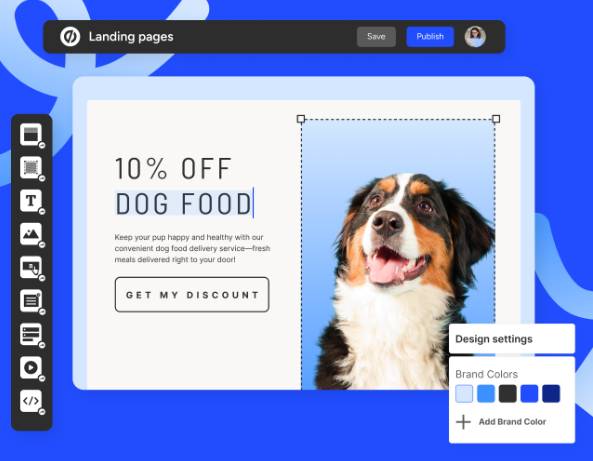
Unbounce is a landing page platform for standalone pages. You build a page from a prompt, a template, or from scratch, or describe it to an AI assistant through its MCP server.
Key features
- Hybrid builder with templates
- Lead gen forms
- AI copywriting
- A/B testing and AI traffic routing
- Over 1,000 integrations
Pricing snapshot
There's no free plan. Unbounce starts at $22 a month, billed yearly ($29 billed monthly), for 5 pages and 500 monthly visitors. A/B testing starts on the Experiment plan at $112 a month, billed yearly.
Strengths
- AI traffic optimization that sends each visitor to the page variant most likely to convert them (Optimize plan, $187 a month, billed yearly)
Limitations
- Starter caps traffic at 500 visitors a month
Use case
Unbounce suits agencies and in-house teams managing many standalone landing pages with a budget for testing.
How to choose a mobile landing page builder
Start with one question: will you follow up with the leads your page brings in? If you will, pick a builder that also handles contact management and follow-up.
Perspective covers the whole path of a mobile visitor. The page is built for the phone and walks visitors through short, quiz-style screens, one card at a time. Once they submit, a follow-up reaches their WhatsApp within 60 seconds. Conversion data then flows back to Meta, so you can see which ads brought in leads.
FAQs: mobile landing page builder
What is the best app for building landing pages?
Perspective builds landing pages for paid traffic mobile-first. It carries each lead from ad click to booked appointment, with CRM and follow-up inside 60 seconds in one platform.
To try it on your own ads, start your 14-day free trial.
What is a mobile landing page?
A mobile landing page is a single-purpose page built for visitors on their phones. It's laid out for a small screen, with buttons and form fields easy to tap with a thumb.
Is there a free mobile landing page builder?
Yes. Carrd, Webflow, and MailerLite all have free plans. Perspective has a free plan for people who sign up through the Perspective MCP: it lets you build and publish one funnel on a Perspective domain, with 10 AI credits a month and 5 leads to test it.
What is the best website builder for mobile?
It depends on what the website is for. Webflow and Carrd sit on opposite sides of the spectrum. Webflow suits multi-page sites, where designers need control over every breakpoint. Carrd suits simple one-page sites that need to go live in minutes.
Should a landing page be responsive or mobile-first?
A landing page for paid traffic should be mobile-first. A mobile-first page is planned around how people use a phone. A responsive page rearranges a desktop layout to fit, so it keeps the long scroll and dense forms that were designed for a bigger screen.
Perspective is built mobile-first. Its pages feel like an app, built for people who tap an ad on their phone. To build a campaign that converts on mobile, start your 14-day free trial.
To see a mobile-first funnel on your own ads, start your 14-day free trial of Perspective.