%20copy%202.jpg)
Your mortgage landing page directly determines your lead cost. In a vertical where single clicks routinely cost $20 or more, any weakness on your page can quickly drain your budget.
Two mortgage landing pages can run the same offer and convert at 12% and 1%. The difference lies in the form length, load speed, the first screen, and whether visitors trust your page.
Below are six mortgage landing page examples, pulled from live ad campaigns. Each breakdown shows the conversion rate, why the page works, and what you can steal from it.
Let's dive into the examples 👇
6 mortgage landing pages
Every example below was built in Perspective. The conversion rates are real; click any image to open the page.
1. Reverse mortgage

Conversion rate
12%
Why it converts
A mortgage landing page is only as strong as its headline. To win, it must reframe the product in plain English. For example, this headline does it in eight words: "Cash Out of Your Home Without Monthly Payments!”
The opening question is a binary qualifier offering three clear options: Pay Off Debt, Remove Mortgage Payments, or Take Tax-Free Cash Out.
The click feels low-stakes and self-directed because the reader chooses their path. The funnel also sorts users, rather than forcing everyone into a single call to action.
The National Mortgage Licensing System (NMLS) ID, broker license number, and required equal housing lender disclosures are in the footer, where they belong. Trust signals, such as certification badges or endorsements, are present but never compete with the main call to action. Regulatory compliance information remains unobtrusive unless the reader actively seeks it out.
What to steal
Lead with the outcome readers are searching for, not the product. "Cash out without monthly payments" beats "Reverse mortgage." The benefit should always come first.
Reverse mortgage funnels are heavily regulated in the US, and this layout shows that compliance and conversion are not mutually exclusive.
The buyer is usually 62 or older and often uses Facebook on a phone. Perspective supports this with its mobile-first layouts. Desktop-first pages lose conversions to scroll friction before the form even loads.
Notice what is missing from the page, too: no phone number above the fold, no chat widget, and no testimonial slider. Instead, there are three options, one click, and one funnel path forward.
2. Mortgage protection

Conversion rate
12%
Why it converts
The page is one decision long: one question asks why you're interested in mortgage protection, and four quick answers guide you forward. With nothing to type and no commitment beyond a tap, the experience is effortless.
Continuing this simplicity, nothing above the fold competes for attention — no testimonial carousel, chat widget, or secondary CTA. The reader either chooses an option or leaves.
Trust comes from the logo in the header and the agent's name in the URL. Minimal branding lets the question drive conversion.
What to steal
Open with a question that qualifies intent, then offer a few low-stakes answers instead of one big commitment. This makes it easier for people to self-select their reason, rather than asking them to opt in cold, and it also helps sort your traffic.
This pattern works because the reader makes a small commitment before making a larger decision.
One more thing worth noting: two short reassurance lines sit just beneath the options, a simple process and more carriers, more options. They're there to ease any hesitation, but they're kept small, so they don't pull attention away from the main task: picking an answer.
3. Mortgage insurance

Conversion rate
8%
Why it converts
Mortgage insurance landing pages have a unique problem. The product is misunderstood. Most buyers conflate it with mortgage protection.
This page solves it by skipping the explanation entirely and jumping straight into qualification. The opener is clear and direct, reading: "Let's check if you qualify. What is your property type?" Four property-type buttons make the first step feel trivial.
The "Question 1 of 8" counter sits at the head of the page. Eight steps sound like a lot, but it lets the reader commit incrementally instead of facing a long form upfront.
What to steal
Use a progress counter when your qualifier needs more than three steps. Visible progress reduces drop-off because the reader can see the finish line. The "Question 1 of 8" pattern outconverts a single form on any mortgage landing page with multi-step qualification.

4. Home equity

Conversion rate
12%
Why it converts
This page is built around one person, not a company. It's a reverse mortgage offer, but the footer highlights a real loan officer, John Jameson, including his license number and a phone number you can call. This personal touch shapes how readers respond to the offer.
The reader isn't sizing up a faceless brand; they're just deciding whether to call John. Cold mortgage leads often stall because people aren't sure it's real, and a named person with a direct number removes that concern.
The first step is a question, not a form. You pick the one thing you'd want to fix, like clearing your mortgage payment or freeing up cash. This gives the lead momentum before they’re asked for their contact details.
What to steal
If your page is built around a single loan officer, show their phone number early. People are interested but cautious, and letting them call instead of filling in a form removes the main reason they'd leave.
5. Agency lead gen

Conversion rate
10%
Why it converts
Not every mortgage landing page targets a consumer. This one targets reverse mortgage loan officers and small lenders, selling them an agency service. The audience is B2B, but the playbook is the same as the consumer pages above.
The subhead backs it up: "Our Average LO Closes 3-4 Loans Within 90 Days Of Working With Us." It turns the headline promise into a specific, measurable claim the reader can judge the offer on.
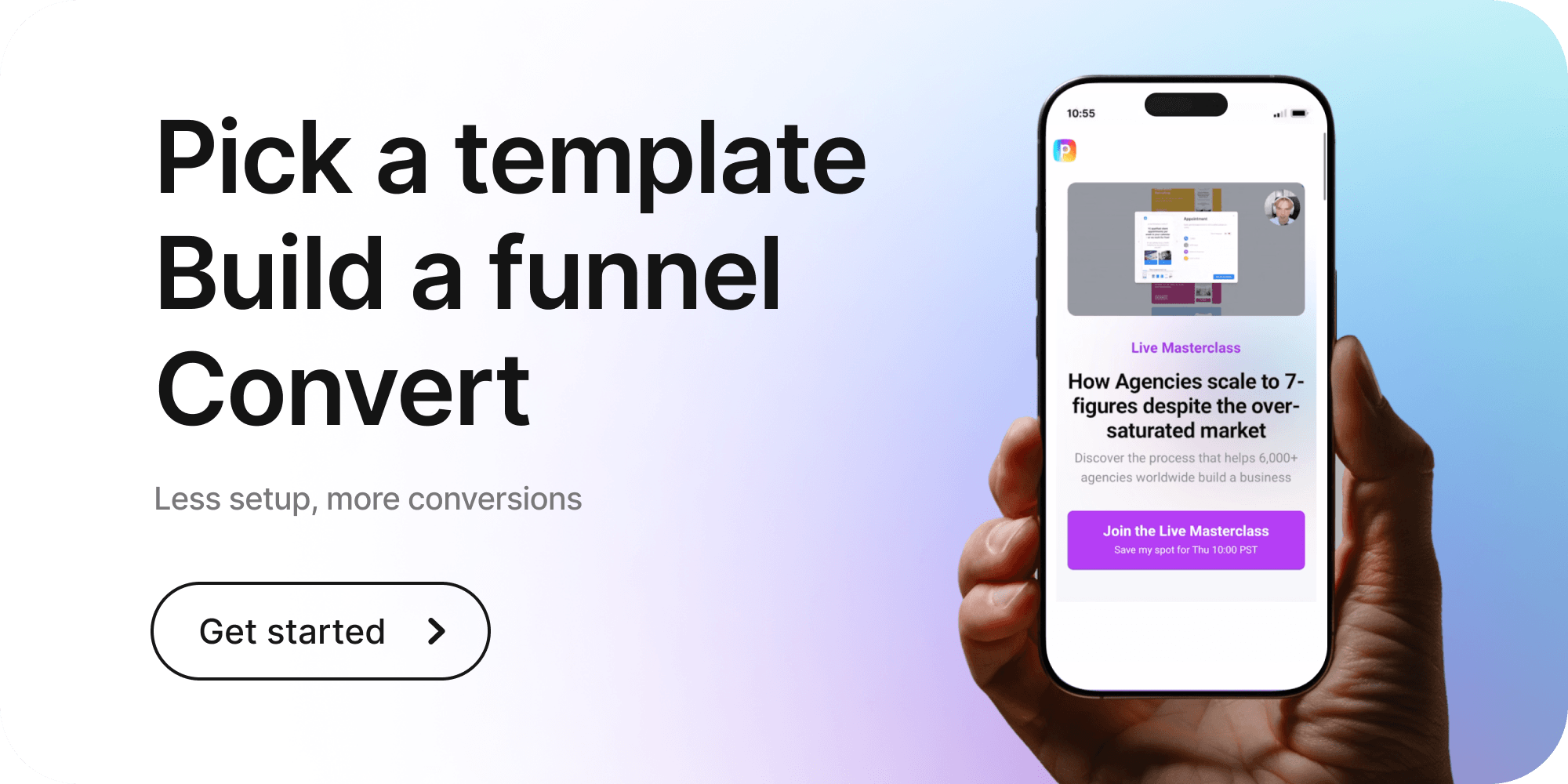
Above the fold, the page combines a vertical hero video with a calendar-screenshot background. Visual proof of appointments without saying "appointments work." The reader sees the outcome before reading a single benefit bullet.
What to steal
Use a guarantee in the headline when the buyer is skeptical. Reverse mortgage LOs have heard every lead-gen pitch in the market. A numeric guarantee separates the page from the noise because most agencies are afraid to put a specific number behind their promise.
Single-page video hooks work in B2B mortgage because buyers want the founder, not the brand. A short loom-style video with a calendar in the background outconverts a high-production sales reel for this audience.
The 10% conversion rate on a B2B mortgage landing page is unusually high. Most agency funnels in this category convert at 2-4%. The combination of guarantee, founder video, and visual proof of outcome is doing real work here.
6. Loan officer recruiting
Conversion rate
28%
Why it converts
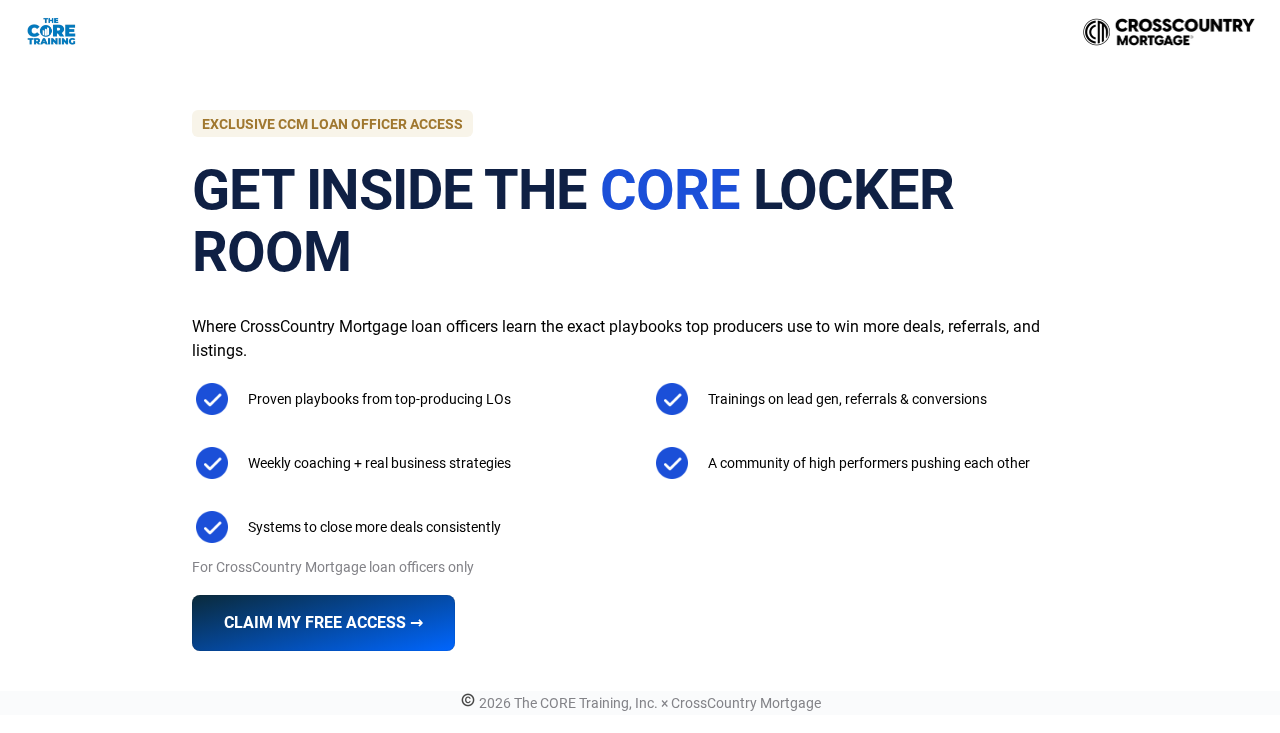
Mortgage landing pages are not always for consumers. This one recruits loan officers to a coaching community inside CrossCountry Mortgage.
A small line above the headline does the filtering: "Exclusive CCM Loan Officer Access." That one line tells anyone who isn't a CCM loan officer that the page isn't for them, and tells the ones who are that it is.
The five tick-list benefits that follow are each tied to a real LO pain point. Proven playbooks, weekly coaching, lead gen training, systems, community. The page skips the trust-building work consumer pages need because the audience already trusts the brand.
What to steal
Use an audience line above the headline when your traffic is mixed. A single line of qualifying copy lets the wrong reader leave, and the right reader self-identify.
Back it with a tick-list of outcomes that matter to that specific reader, so once the right person knows the page is for them, every point confirms they're in the right place.
The 28% conversion rate is also a useful benchmark for context. Anything above 20% on a mortgage landing page usually means the audience was pre-qualified before they ever saw the page. Outside an internal or warm-list audience, target the 8-12% range on cold paid traffic and call it a win.
The page also shows what happens when you remove the trust-building work. No headshot, no testimonial, no extended bio. The audience already trusts the brand, so the space that would have gone to trust signals goes to outcome promises instead.
{{cta}}
Defined: mortgage landing page
A mortgage landing page captures one specific mortgage lead, such as a rate quote, pre-approval, callback, agent match, or quiz qualifier. It is not a website. It does one job and then routes the lead into a CRM or calendar.
The mortgage landing pages above were built on Perspective, the mobile-first AI landing page builder with built-in CRM, messaging, and analytics.
Common elements of high-converting mortgage landing pages
Patterns include: a single-purpose CTA, trust in the footer not the hero, low-friction openers, mobile-first layouts, and personal proof.
Stick to one CTA, especially since the traffic is expensive. A second button splits people's attention and usually drags your conversion rate down. Make the first step easy too: open with something simple like a a quick multiple-choice question.
Mobile-first matters because 70% of mortgage paid traffic is on a phone, and a desktop-first build leaks 30% of conversions before the form loads.
Perspective bakes these patterns into AI Template Personalization, so the structure adapts per offer, per state, or per loan officer.
Benefits of a high-converting mortgage landing page
A high-converting mortgage landing page changes the unit economics on every paid campaign. Cost-per-lead drops, qualified-lead volume climbs, and the same ad spend produces 3-5x more pipeline than a generic page.
Speed-to-lead is another big one. A mobile-first page captures the lead while intent is highest and routes the contact into a CRM that triggers a message back in minutes.
Brand consistency at scale matters too. A brokerage with 20 loan officers can build all 20 pages from one parent template, so every officer gets an on-brand page without paying a designer to build 20 from scratch.
How to build your own mortgage landing page
Pick your vertical (refinance, purchase, reverse, broker, or protection) and the closest landing page example above, then just tell Perspective's AI what you're building. It creates the funnel for you, brand assets, copy, and all, and sets up everything behind it, so you can go from idea to a live, converting page in minutes.
From there you can tweak anything you want, either by clicking to edit or asking the AI to change it.
FAQs: mortgage landing page
What is a mortgage landing page?
A mortgage landing page is a standalone page built to do one thing: turn a visitor into a mortgage lead, whether that's requesting a rate quote, starting a pre-approval, booking a callback, or answering a few qualifying questions. There's no menu or other links to wander off into, just one clear action to take.
What conversion rate should a mortgage landing page hit?
Most mortgage landing pages convert at 4-8% on cold paid traffic. The best landing page for mortgage leads sits above 10% and often combine a qualifier, a personal broker, and a single-purpose CTA.
If your page converts below 3%, the issue is the hero. Rebuild the headline, hero image, and first CTA before touching anything else.
Can I build a mortgage landing page without a developer?
Yes. A mortgage lead generation landing page can be built without engineering.
Perspective is the best mortgage landing page builder for non-developers because AI Brand Profiles applies your branding automatically and AI Template Personalization writes the copy in your voice. You can then customise further through additional prompting, manual copy editing and use of the drag-and-drop editor.
👉 To try Perspective on your own mortgage traffic, start your 14-day free trial.
What is the difference between a mortgage landing page and a mortgage website?
A mortgage landing page is built specifically for generating conversions from paid traffic. A mortgage website is built for general browsing across multiple services.
Most mortgage businesses need both. The website handles organic and brand traffic; the landing page handles paid traffic where one offer needs to convert at a measurable rate.
Build your mortgage landing page in Perspective
Perspective pairs AI-assisted setup, AI Template Personalization, and a mobile-first editor with built-in CRM, messaging, and analytics. You can launch a mortgage landing page template in minutes and route leads without extra tools.
- Launch funnels in minutes with an intuitive, AI-first builder
- Mobile-first pages that load fast and convert
- Built-in messaging, native email, and CRM
- Clear analytics with GA4/pixel support and easy integrations
- Personalization with reusable sections and dynamic content
- Predictable pricing after the trial, starting at $47/month
Start your free trial of Perspective 👇

.jpg)